Customers want answers quickly day or night. Businesses that can’t keep up will start to see impacts on their reputation and revenue. An AI chatbot for customer service can provide immediate support when people need it, reducing wait times and relieving pressure from human agents.
Providing Customers Answers Takes Time
One phone line or email address can only handle so much traffic at a time. When product launches, holidays, or other high-volume periods cause a spike in inquiries, customers don’t want to wait their turn. Oftentimes, their questions can be answered quickly if someone is available to chat.
Deploying an AI chatbot for customer service can free up time for your human agents by instantly providing customers with high-quality answers to repetitive questions. With the ability to route customers to the appropriate agent when necessary, a bot can handle incoming inquiries from visitors starting on page load.
Build Bot Responses With Care
Chatbots are only helpful when they understand what people are saying, and can explain answers clearly. That’s why many powerful solutions are trained using real customer questions in addition to policy documents and product resources. This lets the bots understand nuance and provide accurate answers fast.
chatbotsai.net provides an overview of how this technology works, allowing businesses to investigate bot building in a hands-off way. When done correctly, your customers should forget they’re talking to a bot. Instead, they’ll be impressed with how fast someone was able to support them.
Key Advantages to Automating Customer Service
At a high level, most customer support leaders are searching for ways to do more in less time. Deploying a chatbot is one way to increase velocity without overburdening your team. Here are a few ways automation can improve performance.
- Faster response times let you satisfy more customers.
- Automation can instantly deflect common questions.
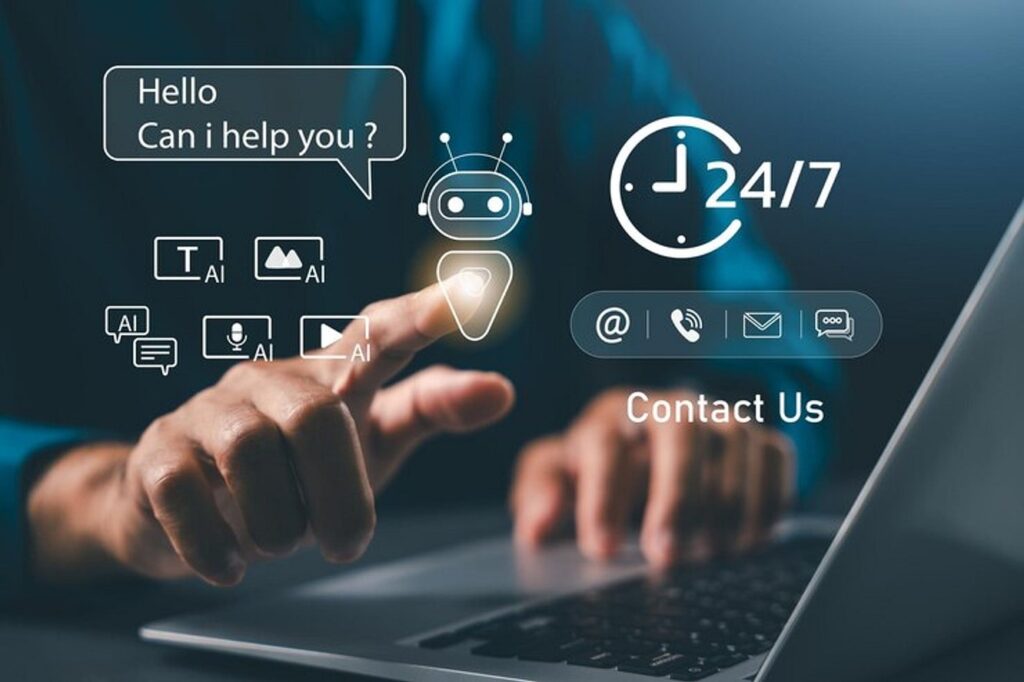
- Live support is available 24 hours per day, 7 days per week.
- Human agents are free to focus on higher-level support issues.
- Chatbots ensure consistent language is used at scale.
- Instant answers create stronger experiences for new customers.
Delivering support in a timely manner won’t just help your internal metrics, it also fuels happier customers. After engaging with fast customer service, customers are more likely to make another purchase and leave a positive review.
Serving Customers’ Frequently Asked Questions
Whether it’s about shipping times, billing issues, password resets, return policies, or setup instructions, your customer service team is likely seeing the same questions over and over. An effective bot will be able to draw answers from your knowledge base and serve them up instantly.
Additionally, a good chatbot will know when to escalate to a human being. Whether the question was too complicated or caused the customer to become frustrated, AI chatbots are able to transfer leads quickly without dropping the customer into another waiting queue.
Who Can Implement a Customer Service Chatbot?
Any business that provides customer service can benefit from a chatbot. Here are just a few use cases where bots have proven to be attractive to companies.
- Retail stores use chatbots for order updates and shipping information.
- Software businesses use chatbots to troubleshoot common issues.
- Hospitals use chatbots to guide patients through scheduling.
- Banks use chatbots field questions about account activity.
- Airlines use chatbots to answer booking questions.
- Universities use chatbots to help with course navigation.
These examples demonstrate some of the many ways bots are used, but every business has unique opportunities to deploy. In fact, one of the best bots will feel custom-built for your specific industry.
Finding the Right Solution for Your Team
Before diving into bot development, it’s important to understand what you want the bot to accomplish. Do you want to decrease ticket volume? Provide faster responses? Serve customers in your sales org? Or perhaps a little bit of everything?
Before selecting a chatbot solution for your team, consider these essential factors to ensure its alignment with your goals.
| Objective | Key Feature | Data Source | Customization |
| Decrease Ticket Volume | 24/7 Automation | Policy Sheets | Moderate |
| Faster Responses | Quick Query Handling | FAQ Articles | High |
| Sales Support | Lead Qualification | CRM Logs | Customized |
| Improve Consistency | Pre-Built Responses | Past Chats | Low |
With these factors in mind, your business can create a chatbot solution tailored to your specific needs.
As you assemble your toolkit, make sure the bot is going to be fed information that’s consistent with how your business communicates. Past conversation logs can be great training materials, but your bot should also know how to reference FAQ articles and policy sheets.
Humans Should Still Monitor Chatbot Performance
Just because you have a bot doesn’t mean you should stop paying attention to chats. While bots can automate certain tasks, there will always be cases that require a human touch. Some situations are just too complex or require empathy.
Bots should always be monitored in case there are conversations that need to be improved. Once identified, your team can go back into the bot and make adjustments to prevent future customers from having a similar problem. This also allows for the bot to evolve as your product does.
Learn How Your Chatbot Is Performing
It’s great to think about how a bot can help before you build one. However, you won’t know if your bot is successful until you deploy it and start looking at metrics. Speed is important, but how are your bots deflecting questions? Are customers satisfied after automatized interactions?
Pulling a couple of these metrics together can help you understand where your bot stands. The better you understand its impact, the more you can improve it over time. If you’re ready to build your own bot right now, consider reaching out to a few vendors and testing out their workflow.