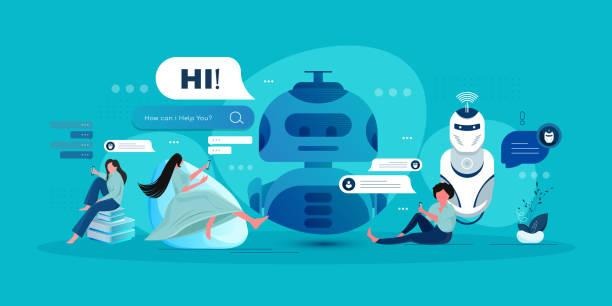

Your support team needs to respond more quickly, resolve more tickets, and be available around the clock. An AI support chatbot can help you achieve each of these objectives. These bots are fast enough to handle basic requests and direct customers while keeping wait times low without reducing service quality.
Quick Overview of AI Support Chatbots
Put simply, an AI support chatbot can automatically answer frequently asked customer questions, collect relevant information, and route complex inquiries to live agents. However, it needs to understand intent, learn from previous conversations, and integrate with your support systems to do these things effectively.
Order tracking, password resets, refund inquiries, and troubleshooting are all simple questions that your chatbot can manage. However, your bot also provides a consistent experience by giving every customer the same information.
You’ll know your chatbot is working if it deflects enough requests to act as a first line of support instead of replacing human support agents. Finding that balance lets you scale your support team and focus available people on high-value or sensitive tickets.
The Value of Bot-assisted Support
Customers aren’t willing to wait for answers, particularly when they initiate contact through live chat or messaging applications. Customers instantly see replies with an AI support chatbot whenever they need, so your availability increases and frustration decreases. That equation leads to happier customers who don’t abandon their tickets.
Pitched correctly, your support staff also spends more time resolving each ticket. There’s less time spent giving the same answers, so your team can work on tickets that require human intervention.
- Response times are cut dramatically, which increases CSAT.
- Bot-assisted software can deflect repetitive questions without increasing headcount.
- Your humans have more time to work on complex tickets.
- Service is available 24/7.
- You’ll begin to collect data from conversations that you can use to identify common problems.
But that’s just the beginning. As your bot handles more conversations, you can use the tickets to discover patterns and improve your product, documentation, and support processes.
Start With Specific Use Cases
It’s easy to feel like you should automate everything. But if your chatbot is too broad, it will fail to perform adequately. First, identify the top issues that your team sees daily. Is it order tracking inquiries? Password resets? Email address confirmation?
These are typical use cases for first-line chatbots, but yours can be unique to your specific support team. Here’s how to identify the best use cases for your business.
Review your current ticket volume and look for repetitive questions. Once you locate the most common requests, decide if those problems can be resolved with clear-cut rules or your existing knowledge base articles.
Human-like Conversation Feels Friendly
Your customers don’t care that they are talking to a bot. In fact, many won’t realize it until they are transferred to a human agent. If it can’t solve their problem quickly and politely, they’ll be annoyed with the chatbot.
That means you need natural language processing, sensible follow-up questions (when necessary), and no irrelevant drop-down menus. You should also prepare your chatbot to recognize when it needs to escalate a ticket to a human agent.
- Everything your bot says should be easy for your customers to understand.
- When the bot does escalate, make sure that it happens quickly.
- Bots should retain conversation context during escalation.
- Conversations should be easy to follow. Keep your prompts short.
- Answers should be correct. Work on ways to improve your accuracy.
Customers don’t care if they are chatting with a person or a robot. As long as they get their answer quickly, they will be satisfied. Having trouble thinking of how to structure your chatbot? Visit chatbotsai.net for examples of what modern bot conversations look like.
Use Real Data to Train Your Bot
You should always start your training with real support tickets. Pull old tickets, chat logs, help articles, and macros to feed your bot’s language patterns. Do not use fake examples or information you think your customers will ask.
Here’s a breakdown of key considerations and tools you can use to effectively train your chatbot using real customer data.
| Data Source | Purpose | Challenges | Best Practices |
| Support Tickets | Identify common inquiries | Outdated information | Use recent and relevant tickets only |
| Chat Logs | Analyze conversational patterns | Poorly structured data | Organize logs systematically |
| Help Articles | Provide accurate responses | Conflicting content | Fact-check articles regularly |
| Macros | Automate repetitive replies | Excessive or irrelevant macros | Streamline and standardize macros |
By focusing on quality data and thoughtful implementation, you can prevent your chatbot from misrepresenting your brand.
Info dumps lead to confusing bot responses. Your chatbot will produce nonsense if you feed it poorly written knowledge base articles full of contradictions. Trim the fat. Delete anything you do not want to echo back to your customers.
Invest some time into how your bot sounds. Artificial intelligence doesn’t mean it needs to talk like a robot. Help your bot sound more like your brand for a better customer experience.
Avoid Bot Trouble Spots
Some conversations are not appropriate for bots. These include suspected fraud activity, seizures, hate crimes, and other abusive language, as well as tickets that contain sensitive information. Your bot should recognize these topics and escalate instantly.
Another place your chatbot should know how to quit is during dead-end conversations. If it can’t answer your customers’ questions after two or three tries, it should refer them to live support immediately.
- Automatically escalate any issue that could be financially or legally damaging to your brand.
- If your bot cannot easily answer a question after several attempts, that’s an indication of bad automation.
- Bot support should never substitute human review for sensitive matters.
- The escalation process should be documented.
- Your customers will appreciate your bot telling them that it doesn’t know something.
Does that mean you shouldn’t use a chatbot? Of course not. It means that you should know when to rely on your bots and when to escalate immediately.
Metrics Matter
When your chatbot starts to impact your customer service metrics, you’ll know it’s working. Which metrics will your chatbot affect?
Automatic responses will improve your first response time statistics. Pending tickets will increase because your bot will contain requests that would have been assigned to agents. Customers won’t be held up by unavailable agents, so your abandonment rate will decrease.
Escalation rates will rise if your chatbot does its job correctly. You should expect to see more tickets handed over to your human agents. That’s a good thing! Chatbots are not meant to replace your support staff, but rather relieve some of their ticket volume.
Improving the Entire Support Experience
Look for opportunities to integrate your bot into every aspect of your customer’s journey. Ideally, your bot should tie into your website search, knowledge base, CRM account data, and ticketing system. Each integration simplifies the customer experience.
Simple customers equal simpler support tickets. Your agents will have an easier time, which means they can spend more time in tickets and less time trying to figure out why your customers are frustrated. The cycle continues because every interaction allows you to learn more about your customers.