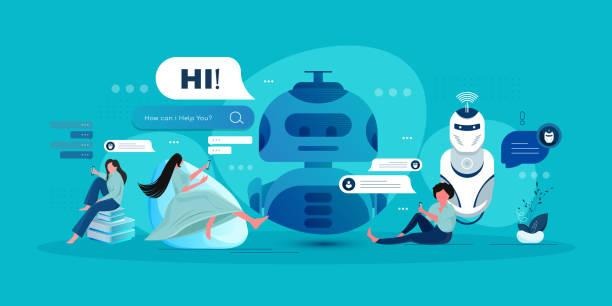

Agents are expected to respond quicker, resolve more inquiries, and provide uniform service through every channel. A customer service ai chatbot helps teams work smarter by answering common questions, routing customers quickly, and deflecting repeat requests so agents have more time for conversations that require empathy.
How Customer Service AI Chatbots Work
Think of a customer service ai chatbot as your digital first line of support. Chatbots resolve frequently asked questions and gather key information before passing the customer to an available agent. It can speed up response times, improve availability, and quickly move customers through your help process without extra friction.
To do this effectively, chatbots must learn from real support conversations, established policies, and accurate product information. A well-trained bot improve customer experiences and agent workflows.
Why Does Efficiency Increase?
Efficiency increases because chatbots take repetitive tasks and do them at scale. Rather than having an agent collect password resets, track order status, or answer billing inquiries one by one, bots can instantly resolve millions of those requests with consistent answers.
Agents have more time to dedicate to high-value conversations. Customers receive fast responses for basic questions. Everyone benefits from spending less time waiting and more time engaging at the right level of service.
Improving Support Efficiencies Benefits Agents How?
Deploying a customer service ai chatbot will make your support team stronger in many ways. Bots can help you handle higher volume, enforce consistent service standards, and predictably manage channel coverage so customers receive timely responses.
- Respond to FAQs anytime day or night.
- Quick responses decrease first reply times.
- Routing rules can direct customers to the correct team.
- Chatbots answer quickly and correctly every time.
- Bots can relieve busy periods and lighten workload.
- Customers find answers fast without paging through FAQs.
Your team will appreciate these advantages most when your business is expanding or regularly experiences bursts of activity. If you’re interested in learning more about automation, check out chatbotsai.net for free resources and examples.
Automating Faq Conversations
A high volume of your support queue probably includes repetitive questions. There are usually a handful of inquiries that people ask all the time. Chatbots can answer these questions by accessing your knowledge base and routing customers through decision trees that guide them to a resolution.
When built correctly, bots can lighten your agent’s load without compromising quality. Humans won’t have to solve the same problem repeatedly, and bots won’t waste anyone’s time with irrelevant replies.
Best Practices for Chatbot Development
- Here are a few best practices to consider when building your chatbot:
- Identify common questions (what, how, why).
- Write bot responses in a way that your customers would speak.
- Direct customers to a human agent when necessary.
- Update bot knowledge whenever something changes.
- Audit conversations to identify bottlenecks.
- Personality is important, make sure your bot sounds like you!
After development, you should evaluate your bot’s performance on an ongoing basis. Recovery rate, exit surveys, and conversation paths can help you make better decisions for future updates.
Where Humans Are Best for Support
Bots are not perfect, and shouldn’t attempt to handle every conversation. Support agents are essential in cases where customers are experiencing emotional distress, making urgent requests, carrying an at-risk account, or have something unique to discuss.
Rather than pushing customers toward a human agent, bots should recognize complex issues and pass customers to the support team immediately. This ensures customers will receive empathy from a person when needed and keeps faster-paced automation in place for smaller requests.
Continuous Improvement With Support Automation
Imagine if your bot could learn from conversations as they happen. Everything from previous tickets to self-service articles, topic tags, and closed chat transcripts can be used to improve bot knowledge.
As you develop smarter chatbots, pay attention to conversations over time. Make sure responses aren’t duplicated from outdated articles. AI can steadily increase your level of automation, but not if it’s leaving customers with incorrect information.
Measure to Improve Customer Satisfaction
Keeping track of your metrics is the only way to gauge if bots are helping or creating noise. Below are some important key performance indicators (KPI) that can highlight if your chatbot is helping lighten your teams workload.
- Monitor your first response time (FRT).
- Calculate your bot’s resolution rate.
- High escalation rates mean agents need to rescue more conversations.
- Survey customers to see how they rate their experiences.
- Measure ticket deflection percentages.
- Track your average handle time (AHT) to see if your agents have more bandwidth.
Metrics will tell you if your bot is effective at helping customers or not. They can also clue you in to where training or process improvements can be made to your bot’s development.
Creating an Exceptional Support System
Excellent support is quick, accurate, and compassionate. By integrating a customer service ai chatbot into your existing support framework, you can create a better experience for both agents and customers. Bots allow you to scale speed and efficiency while leaving complicated conversations for your support team to handle.
With the right tool in place, AI can streamline certain parts of your customer service experience without feeling automated or insensitive. As your business grows, you can scale responsibly, respond in a timely manner, and provide a reliable experience for your customers at every touchpoint.