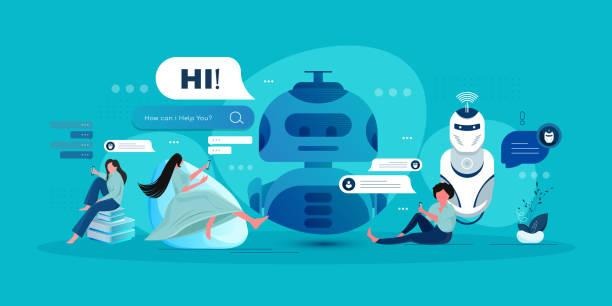

Support teams in large organizations are used to high volume. Customers want quick, accurate responses while internal teams manage requests across global markets, rising costs, and growing complexity. An enterprise chatbot can lighten that load by deflecting repeat inquiries, instantly routing users, and freeing agents to tackle higher-value issues.
Characteristics of an Enterprise Chatbot
Enterprise bots are designed to scale across dozens of departments and customer journeys. That means systems integration, policy enforcement, and thousands of conversations without sacrificing response quality or brand standards.
Security, compliance, internationalization, CRM connections, and ticketing integrations are just a few of the extra requirements enterprises will need from their bot. Large volumes of customers and internal users demand a robust solution that grows with the organization.
The Need for Scalable Ai Support Solutions
Support requests don’t take a lunch break. As soon as products launch, regions open, or service levels increase, teams can expect their queues to swell. AI can lighten the load by deflecting common inquiries instantly and routing complex cases smarter.
Scalable support also allows consistency across channels. Customers may start a conversation on chat, continue via email, and finish on Facebook Messenger. With powerful automation, the enterprise chatbot can provide consistent answers while capturing key context for agents.
Capabilities Needed for Enterprise Grade Bot
Powerful chatbot solutions balance automation with customizability. While the bot should be able to understand intent and provide answers for simple questions, it should also seamlessly escalate when necessary.
- Ability to understand intent across departments
- Integrations with CRM systems and knowledge base
- Multilingual capabilities for diverse audiences
- Role-based permissions for employees/users
- Analytics that show deflection rates and gaps
- Ability to hand off to a human agent with full conversation history
Deflection does not mean delegating every issue to technology. Teams need to maintain trust with their customers by providing quality support when bots fall short. A platform like chatbotsai.net can help teams bridge that gap between small scale automation and enterprise-grade bots.
Designing Chatbots for Multiple Departments
Customer support for an enterprise may touch Sales, Billing, Logistics, Human Resources, and Tech Service. Instead of trying to cover every question from every department in one bot, it’s better to architect around common workflows.
The following table highlights key considerations when designing chatbots for multiple departments.
| Aspect | Benefit | Example Use | Challenge |
| Workflow Mapping | Improves efficiency | Sales inquiries | Identifying overlaps |
| Conversation Routing | Smarter handoffs | Tech support requests | Handling edge cases |
| Departmental Focus | Tailored responses | HR policy questions | Cross-department consistency |
| Live Agent Escalation | Better customer experience | Billing disputes | Minimizing delays |
By focusing on these elements, enterprises can ensure their chatbot architecture is optimized for diverse departmental needs.
Identify the most common questions your teams are receiving and start to map out where there are overlapping conversations. Create conversation routes so the bot knows when to reply, when to ask questions, and when to hand off to a live agent.
Integrating the Bot Into Your Workflow
Integration turns a chatbot from a novelty into a tool. Connected to the right systems, bots can look up order status, create tickets, verify identity, and update records all without requiring customers to repeat themselves.
- Integrates with existing customer support solutions
- Pull customer information from validated data sources
- Provide knowledge articles from a central repository
- Trigger action items for critical service requests
- Record all interactions for auditing and compliance.
Stand-alone bots are limited to scripted replies based on keyword matching. But when you integrate, you empower your chatbot to reduce manual workload while providing faster responses and better visibility to your teams.
Enterprise Security Considerations
Security and compliance are top of mind for any organization adding a chat feature. Support conversations can include personal information, payment details, or private internal data. If not configured properly, bots can leak information to the wrong people.
Information retention, authentication steps, audit logs, and override processes should be designed in advance. Taking the time to setup rules will ensure bots are helping with compliance efforts rather than creating more work.
Tracking Success Across Channels
Success is more than volume. You should be able to track key metrics (like CSAT and First Contact Resolution) by channel and use case. This will help you identify problem areas quickly.
If conversations are being dropped or escalated too frequently, revisit your intents and knowledge articles or handoff criteria before trying to scale up your deployment.
Knowing When to Escalate to Human Agents
No bot is perfect and automation should never come at the cost of frustrating your customers. Part of a successful bot strategy is understanding when to escalate to a live agent.
- Anything that causes complaints or refunds
- Technical problems
- Policy exceptions
- Verification issues or sensitive information
- Detects rage or repeated frustration
Create a seamless handoff experience so customers know their conversations are being routed for a reason. Remember, the goal isn’t always to eliminate your agents, but allow them to focus on higher-value tasks.
Planning Your Ai Customer Support Strategy
Chatbots are not a set it and forget it solution. If you want your bot to provide enduring value your team needs to treat it as a system that will constantly evolve.
Regularly review conversations so your team can adjust responses as products evolve and customer expectations change. This is especially important for enterprises that will need documented standards for tone, approvals, ownership, and bot maintenance.