
Virtual Assistant Bot
Modern workdays are filled with tasks that may seem small individually but can consume a significant amount of time when repeated every day. Answering emails, scheduling appointments, responding to customer questions, organizing information, and managing reminders can all take employees away from more important responsibilities.
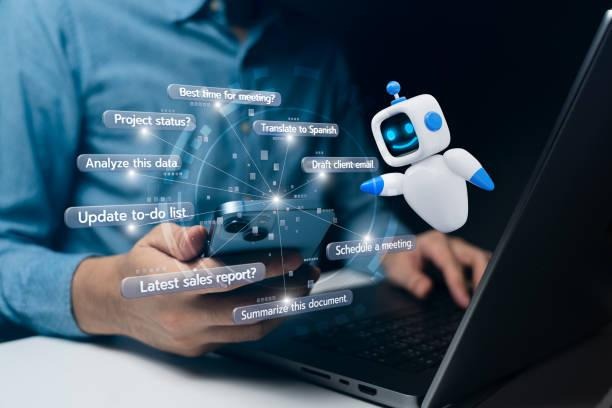
A Virtual Assistant Bot can help automate many of these routine activities. By using artificial intelligence and automation, a virtual assistant can understand requests, provide information, perform specific actions, and support users throughout the day.
For businesses, this can mean less repetitive work and more time for employees to focus on creative tasks, problem-solving, decision-making, and customer relationships.
What Is a Virtual Assistant Bot?
A Virtual Assistant Bot is an AI-powered software tool designed to assist users with routine tasks and requests.
Users can interact with the assistant through text or voice. The bot processes the request, determines what the user needs, and either provides an answer or performs an appropriate action.
Depending on its capabilities and integrations, a virtual assistant can help with:
- Scheduling appointments
- Managing calendars
- Answering questions
- Sending reminders
- Assisting with emails
- Organizing information
- Supporting customers
- Managing routine workflows
- Retrieving business information
- Connecting with other software systems
Unlike basic automation that follows a fixed sequence of commands, AI-powered virtual assistants can use natural language processing to understand different ways users express their requests.
How Does a Virtual Assistant Bot Work?
A Virtual Assistant Bot typically combines conversational AI, automation, and integrations with other software.
1. The User Sends a Request
The interaction begins when a user types or speaks a request.
For example:
“Schedule a meeting with the sales team for Friday afternoon.”
2. The Bot Interprets the Request
The AI analyzes the language to determine the user’s intent, important details, and the action that needs to be performed.
3. The Bot Accesses Relevant Information
If necessary, the assistant can connect with tools such as calendars, CRM platforms, email systems, databases, or helpdesk software.
4. The Assistant Performs the Task
Depending on its permissions and integrations, the bot can retrieve information, schedule an event, provide an answer, or initiate another workflow.
5. The Bot Confirms the Result
The assistant can tell the user what action was completed or explain what additional information is required.
This process allows users to complete certain tasks through a conversational interface rather than navigating multiple applications manually.
Benefits of a Virtual Assistant Bot
Businesses and individuals can benefit from AI-powered virtual assistants in several ways.
Saves Valuable Time
Repetitive administrative tasks can consume hours over the course of a week. Automating these activities allows employees to spend more time on higher-value responsibilities.
Improves Productivity
When routine tasks are handled automatically, employees can focus on projects that require creativity, analysis, communication, and decision-making.
Provides Around-the-Clock Assistance
A virtual assistant can provide automated support outside traditional office hours, allowing customers and employees to access certain information whenever they need it.
Reduces Repetitive Errors
Manual data entry and repetitive processes can lead to mistakes. Automation can improve consistency by following standardized workflows.
Improves Customer Experience
Customers appreciate quick responses. A virtual assistant can answer common questions and provide basic assistance without requiring customers to wait for an employee.
Supports Business Growth
As a business grows, so does the volume of administrative and customer service work. Automation can help organizations manage increasing workloads without requiring every task to be handled manually.
Key Features of a Virtual Assistant Bot
The features available depend on the platform, but useful capabilities may include:
- Calendar management
- Appointment scheduling
- Email assistance
- Customer support automation
- Task reminders
- Information retrieval
- Data organization
- FAQ responses
- Workflow automation
- CRM integration
- Helpdesk integration
- Voice communication
- Text-based communication
- Business software integration
When these capabilities work together, a virtual assistant can become a useful part of an organization’s daily workflow.
Real-World Applications
Virtual Assistant Bots can support many different industries and departments.
Healthcare
Healthcare organizations can use virtual assistants to help schedule appointments, answer general questions, provide reminders, and direct patients toward appropriate resources.
Retail
Retail businesses can use AI assistants to answer product questions, provide order information, assist with returns, and handle common customer inquiries.
Financial Services
Financial institutions can use virtual assistants to provide general account information, answer common questions, send reminders, and guide customers toward relevant services.
Human Resources
HR departments can use virtual assistants to answer employee questions, assist with onboarding, coordinate interviews, and provide information about company policies.
Education
Educational institutions can use AI assistants to answer student questions, provide course information, assist with enrollment, and direct students toward relevant resources.
Professional Services
Businesses such as consulting firms, agencies, and service providers can use virtual assistants to manage appointment requests, collect inquiries, and answer frequently asked questions.
These applications demonstrate how AI automation can reduce repetitive work across different business functions.
Pros and Cons
Like any technology, Virtual Assistant Bots have both advantages and limitations.
Pros
- Saves time
- Reduces repetitive work
- Improves productivity
- Provides consistent responses
- Can operate around the clock
- Supports multiple users
- Helps reduce operational workloads
- Can integrate with business software
- Supports business scalability
Cons
- Initial setup and planning may be required
- Complex requests may still require human assistance
- Integrations can require technical expertise
- Information needs regular updates
- AI responses should be monitored
- Advanced features may involve additional costs
Understanding these limitations helps businesses implement virtual assistants realistically.
Best Practices for Using a Virtual Assistant Bot
A successful virtual assistant should simplify work rather than make processes more complicated.
Start With Repetitive Tasks
Businesses should identify routine tasks that consume significant amounts of employee time and begin automating those activities first.
Use Simple Language
Users should be able to communicate with the assistant naturally. Responses should be clear, concise, and easy to understand.
Keep Information Updated
The assistant should have access to accurate information about products, services, company policies, schedules, and other relevant business details.
Provide Human Assistance
A virtual assistant should have a clear escalation process for requests that require human expertise or decision-making.
Monitor Performance
Businesses should review conversations, task completion rates, customer feedback, and other performance indicators to identify areas for improvement.
Test Automated Workflows
Regular testing can help businesses discover broken integrations, inaccurate responses, and other problems before they affect users.
At ChatbotsAI.net, we believe automation should focus on creating practical and useful experiences. A virtual assistant should save users time while maintaining accurate and helpful communication.
Common Mistakes to Avoid
One common mistake is trying to automate every business process at once. Businesses can achieve better results by starting with a few repetitive tasks and expanding automation gradually.
Another mistake is failing to update the assistant when company information changes. Outdated product details, policies, or schedules can lead to incorrect responses.
Businesses should also avoid creating overly complicated conversations. Users should be able to complete tasks with as few unnecessary steps as possible.
Finally, customer and employee feedback should not be ignored. Feedback can reveal where the assistant is helping and where improvements are needed.
Virtual Assistant Bot vs. Traditional Automation
Traditional automation typically follows predefined rules and workflows. It works well when the process is predictable and structured.
A Virtual Assistant Bot can add a conversational layer to automation. Instead of navigating through several menus or applications, a user can describe what they need in natural language.
For example, rather than manually opening a calendar and creating an event, a user might tell the assistant:
“Remind me about the client meeting tomorrow at 10 AM.”
The assistant can interpret the request and, when properly integrated and authorized, create the reminder.
This makes automation more accessible to people who may not want to navigate complex software interfaces.
Why Virtual Assistant Bots Are Becoming More Important
Businesses today manage increasing amounts of information while customers expect faster service. Employees also need tools that help them spend less time on administrative work.
A Virtual Assistant Bot can address both challenges by automating routine activities, reducing delays, and making information easier to access.
Instead of spending valuable time on repetitive administrative tasks, employees can concentrate on strategic planning, creative work, customer relationships, and problem-solving.
As AI technology develops, virtual assistants are likely to become increasingly integrated into everyday business operations.
The Future of Virtual Assistant Bots
Future virtual assistants may become more capable of understanding context, managing complex workflows, and working across multiple business applications.
Businesses may use them to coordinate schedules, manage customer conversations, retrieve information, assist employees, and automate processes across different departments.
However, AI assistants are unlikely to eliminate the need for human expertise in every situation. Human judgment, creativity, empathy, and decision-making remain important, particularly when dealing with complex or sensitive situations.
The most effective approach is likely to be a partnership between AI automation and human employees.
Conclusion
A Virtual Assistant Bot can help businesses automate repetitive tasks, improve productivity, and provide faster assistance to customers and employees.
From scheduling appointments and managing reminders to answering questions and supporting customer service, AI-powered virtual assistants can reduce manual workloads and make everyday operations more efficient.
However, successful implementation requires thoughtful planning, accurate information, regular monitoring, and appropriate human support.
When used strategically, a Virtual Assistant Bot is more than an automated tool. It can become a practical digital assistant that helps people spend less time on repetitive tasks and more time on work that requires human skills and expertise.
Explore ChatbotsAI.net to learn more about AI chatbot technology and how businesses can use automation to improve their daily operations.
Frequently Asked Questions
What is a Virtual Assistant Bot?
A Virtual Assistant Bot is an AI-powered software tool that can understand user requests, answer questions, and automate certain tasks such as scheduling, reminders, customer support, and information retrieval.
Can a Virtual Assistant Bot help small businesses?
Yes. Small businesses can use virtual assistants to automate repetitive tasks, respond to customer questions, manage appointments, and save valuable employee time.
Can a Virtual Assistant Bot replace employees?
No. Virtual assistants are designed to support employees by handling routine activities. Human workers remain essential for creative work, complex decision-making, personal interactions, and situations requiring professional judgment.
What tasks can a Virtual Assistant Bot automate?
Depending on its integrations and capabilities, it can assist with scheduling, reminders, customer support, email-related tasks, information retrieval, data organization, lead collection, and other repetitive workflows.
Can Virtual Assistant Bots work 24/7?
Yes. Automated assistants can operate continuously, allowing them to provide support outside regular business hours.
Do Virtual Assistant Bots make mistakes?
They can. AI systems may misunderstand requests or provide incorrect information, which is why businesses should monitor performance, maintain accurate information, and provide human support when necessary.