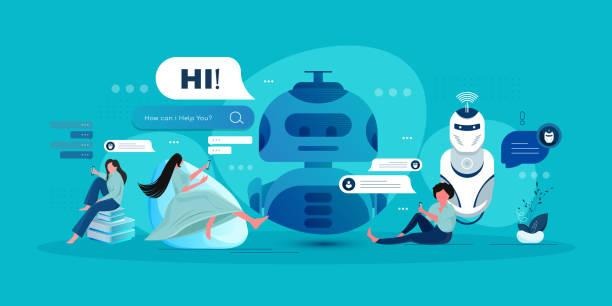

“Bot” used to mean something narrow — a script that replied to a keyword and not much else. Ai bot software has quietly outgrown that definition. Modern systems can do a lot of things at the time. They can handle steps to figure something out. They can also connect to internal tools at the same time like six different tools. Modern systems do not just tell you what to do they actually do things.This change is important for more, than talking to customers. The same technology is now used in other areas like how work gets done and how data is processed. These areas have nothing to do with customers. Understanding how much things have changed helps us see why people are talking about automation in a way now. Automation conversations are different than they were a couple of years ago.
Beyond Customer-Facing Chat
Customer support gets the most attention, but it’s really just one application among several:
- Internal process automation. Approving routine requests, routing documents, flagging exceptions — tasks that used to require someone manually checking a queue.
- Data entry and reconciliation. Matching records across systems, catching discrepancies, and flagging anomalies faster than manual review ever could.
- Report generation. Pulling data from multiple sources and assembling a coherent summary on a schedule, without someone compiling it by hand.
- Employee-facing assistants. Answering HR, IT, and policy questions internally, the same way a customer-facing bot handles external questions.
What Changed to Make This Possible
This isn’t just marketing spin dressed up as innovation — a few real shifts drove it:
- Underlying model capability jumped significantly. Reasoning through multi-step problems used to require heavy custom engineering; now it’s closer to default behavior.
- Integration tooling matured. Connecting bots to real business systems went from a custom development project to something closer to plug-and-play.
- Cost dropped meaningfully. What required enterprise budgets a few years back is increasingly reachable for mid-sized and even small businesses.
- Trust in automation grew. Businesses that saw early wins in one area became more willing to expand automation elsewhere.
Where Businesses Are Seeing Real Impact
A few patterns show up consistently across industries adopting this:
- Reduced manual, repetitive work. The kind of task nobody enjoys doing and everyone’s relieved to hand off.
- Faster turnaround on routine decisions. Approvals and simple classifications that used to sit in a queue now resolve in minutes.
- Fewer errors from manual data handling. Automated reconciliation catches mismatches a tired human reviewer might miss late in the day.
- Freed-up time for actually complex work. Employees redirect attention toward judgment calls instead of repetitive processing.
What to Watch Out For as This Expands
None of this is risk-free — a few things deserve real caution:
- Over-automating judgment calls. Some decisions genuinely need human context that a bot, however capable, shouldn’t be making alone.
- Data access sprawl. The more systems a bot connects to, the more carefully permissions and access need managing.
- Confident errors at scale. A bot making the same mistake across a thousand cases is a bigger problem than one person making it once.
- Underinvesting in oversight. Automation still needs regular review — treating it as fully set-and-forget tends to backfire eventually.
ChatbotsAI.net covers a related angle in its piece on the most advanced AI chatbot features businesses should expect, worth reading alongside this one.
Automation’s Scope Keeps Widening
Ai bot software has moved well past its original customer-chat reputation, and businesses treating it purely as a support tool are missing a lot of what it can actually do now. Internal operations, data handling, and employee-facing workflows are all fair game today, often with the same underlying technology powering a public-facing chatbot. The businesses getting the most value tend to expand deliberately, one workflow at a time, rather than trying to automate everything the moment the technology becomes available.
Frequently Asked Questions
Is AI bot software only useful for customer service anymore?
No — internal operations, data processing, and employee-facing tools are increasingly common applications beyond customer chat.
What made AI bot software capable of handling more complex tasks recently?
Improvements in underlying model reasoning, easier system integration, and dropping costs all contributed to the shift.
Is it risky to automate internal business decisions with AI bots?
Some risk exists, particularly for decisions needing human judgment — careful scoping of what gets automated matters a lot.
Can small businesses really use this kind of automation now?
Yes they can, because the costs are not as high as they used to be. A years ago only big companies could afford this automation but now the prices are lower. Small businesses can use automation too which is really good, for them.
How should a business decide what to automate first?
Starting with repetitive, low-judgment tasks tends to produce the clearest early wins before expanding further.
What’s the biggest mistake businesses make when expanding bot-based automation?
Trying to automate everything at once, rather than expanding deliberately and reviewing results along the way.
Related Reading on ChatbotsAI.net
A few related pieces worth linking to from this article:
- Most Advanced AI Chatbot Features: What Modern Businesses Should Expect — a natural link from the section on what changed to make this possible.
- AI Chatbot Software: How to Choose the Right Solution for Your Business — worth linking from the discussion of expanding automation deliberately.
- AI Customer Service Chat: How Businesses Are Automating Customer Support — pairs well with the customer-facing chat comparison in the intro.
- How a Customer Support AI Chatbot Can Reduce Response Times and Support Costs — fits from the reduced manual work section.
- Chatbot Software Companies: How to Compare AI Solutions for Your Business — a good anchor from the oversight and access-management discussion.