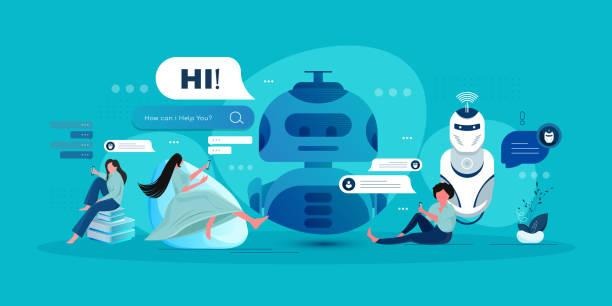

Chat with almost any mid-sized company’s website now and there’s a decent chance you’re talking to something automated before a human ever joins in. That change happened fast. Artificial Intelligence customer service chat is now the thing in many places like stores, banks, hospitals and lots of other businesses. The companies that are not using Artificial Intelligence customer service chat are now the ones that stand out. This is not about getting rid of people who work in customer service. It is about how Artificial Intelligence fits into the way we help customers, which businesses are using Artificial Intelligence the most and what’s different, about Artificial Intelligence customer service chat now compared to the old chatbots that were not very good a few years ago.
What Changed Since the Early Chatbot Era
The tools people remember being frustrating were a different generation entirely:
- Language understanding got dramatically better. Old bots needed exact keyword matches. Current ones handle typos, slang, and half-finished thoughts without stalling out.
- Context now carries across a conversation. Earlier systems treated every message like a fresh start — modern ones remember what was said two exchanges ago.
- Integration depth expanded. Pulling live order data, account details, and inventory status used to require custom development; now it’s often built in.
- Escalation got smoother. Handoffs to a human used to mean starting over. Good setups now carry the full conversation thread along.
Which Industries Are Leaning In Hardest
Adoption isn’t even across sectors — some have moved much faster than others:
- Retail and ecommerce. High conversation volume and clear ROI on cart recovery make this an easy first move for most stores.
- Banking and finance. Balance checks, fraud alerts, and basic account questions automate cleanly, though compliance adds real complexity.
- Healthcare scheduling. Appointment booking and basic triage questions, with clear boundaries around anything requiring actual medical judgment.
- Travel and hospitality. Booking changes and status updates are high-volume, repetitive, and near-perfect automation candidates.
What Businesses Are Actually Automating First
There’s a fairly consistent pattern in what gets automated early, regardless of industry:
- The top five to ten most common questions. Pulled straight from support logs — the highest-volume, lowest-complexity requests go first.
- Anything tied to a status lookup. Order status, appointment confirmation, account balance — data-driven answers that don’t need judgment.
- After-hours coverage. Filling the gap when no live agent’s available, without pretending it’s a full replacement.
- Initial triage before human handoff. Gathering context upfront so the eventual human agent isn’t starting from zero.
Where the Limits Still Show Up
Automation hasn’t erased every rough edge — a few gaps persist across industries:
- Emotionally charged conversations. Complaints and sensitive issues still need a human tone that scripted responses can’t quite fake.
- Highly custom or ambiguous requests. Anything outside a well-defined pattern tends to confuse even well-trained systems.
- Regulatory gray areas. Healthcare and finance especially still require careful boundaries around what a bot’s allowed to say.
- Trust with older or less tech-comfortable customers. Some segments still strongly prefer a person, and forcing automation on them backfires.
ChatbotsAI.net breaks down the mechanics of this shift in more depth in its piece on how a customer support AI chatbot reduces response times and costs, worth reading alongside this one.
The Direction Is Pretty Clear
AI customer service chat is not something that is going away. It is becoming a part of how businesses work, just like live chat became popular about ten years ago. The companies that are really getting benefits from this are not automating every thing. They are using AI customer service chat to handle the tasks that are done over and again and they are keeping real people to deal with the things that need a human touch. This balance is what makes AI customer service chat really work, than just having an AI customer service chat that can only answer simple questions in a poor way. AI customer service chat is what is important here. It is, about finding the right balance between using AI customer service chat and using real people.
Frequently Asked Questions
Is AI customer service chat replacing human agents entirely?
Rarely in practice — most businesses use it to absorb repetitive volume while keeping people for complex or sensitive conversations.
Which industries have adopted this the fastest?
Retail, finance, and travel tend to lead, largely because their support volume is high and heavily repetitive.
How is this different from the chatbots people found frustrating years ago?
Language understanding, context retention, and system integration have all improved significantly since then.
Do customers generally trust automated support now?
Trust has grown, though it still varies by demographic and how transparently the automation is disclosed.
What’s the biggest remaining weakness in AI customer service chat?
Emotionally charged or highly ambiguous requests still tend to need a human’s judgment and tone.
Should a small business bother with this, or is it just for large companies?
Smaller businesses often see faster relative impact, since even modest ticket volume reduction can meaningfully free up limited staff time.
Related Reading on ChatbotsAI.net
A few related pieces worth linking to from this article:
- How a Customer Support AI Chatbot Can Reduce Response Times and Support Costs — a natural link from the section on what businesses automate first.
- AI Chatbot Online: How Businesses Can Automate Customer Conversations 24/7 — pairs well with the after-hours coverage point above.
- How an Ecommerce AI Chatbot Can Increase Online Store Sales — worth linking from the retail and ecommerce section.
- AI for WhatsApp: How Businesses Can Automate Sales and Customer Support — fits from the discussion of channel-specific adoption.
- Best AI Chatbot Online: Comparing Features, Automation, and Business Benefits — a good anchor from the section on what’s changed since early chatbots.