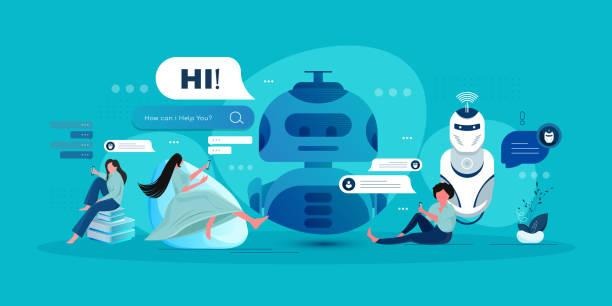

Most visitors won’t wait around. Load a page, scroll for a few seconds, leave — that’s the pattern on far too many sites, and it happens before anyone gets a chance to answer a single question. A website ai chatbot changes that timeline. When someone visits your website and they have to wait six hours for a reply from your contact form they might get tired and go to your competitor. If you have a bot it can answer their question right away even when they are still looking at your website and trying to make a decision. This is not about getting rid of your team. It is about talking to the person at the time when they are actually listening.
Below are some things that can happen when you use a bot, like this what can go wrong and how to see if it is really working for your contact form and your bot.
Why a Website AI Chatbot Changes the Engagement Equation
- Speed beats almost everything else. A visitor with a question wants an answer now, not after filling out a form and waiting for someone to notice it in a queue.
- It works while your team sleeps. Nights, weekends, holidays — someone’s still browsing, and a bot doesn’t clock out.
- It catches hesitation in real time. A visitor lingering on a pricing page for two minutes is telling you something. A well-timed chatbot prompt can turn that hesitation into a conversation instead of a lost tab.
- It removes friction from small questions. “Do you ship to Canada?” shouldn’t require an email thread. That’s a five-second answer a bot handles instantly.
How a Website AI Chatbot Actually Drives Conversions
- Qualifying leads before a human gets involved. The bot asks a few questions upfront — budget, timeline, use case — so your sales team spends time on people who are actually ready.
- Recovering abandoned carts. A chatbot that pops up right as someone’s about to leave checkout, offering to answer a last question, recovers sales that would’ve just vanished.
- Personalizing based on behavior. Someone who’s read three blog posts about a specific feature is a different visitor than someone landing cold on the homepage — the bot can respond accordingly.
- Guiding people to the right page. Confused visitors leave. A chatbot that says “here’s exactly what you’re looking for” keeps them moving instead of clicking back to Google.
At ChatbotsAI.net, we’ve looked at engagement data across dozens of implementations, and the pattern holds up: response speed correlates directly with conversion lift, more than almost any other single factor.
Real-World Examples of Website AI Chatbots in Action
- E-commerce. A clothing retailer adds size and fit questions to the bot’s script — returns drop because customers order the right size the first time.
- SaaS. A trial user gets stuck configuring a feature. Instead of abandoning the trial, the bot walks them through it or loops in support instantly.
- Local services. A dentist’s office chatbot books appointments directly, cutting out the back-and-forth phone tag that used to eat up front-desk time.
- B2B. A chatbot pre-qualifies inbound leads overnight, so the sales team walks in Monday morning to a list sorted by actual intent, not guesswork.
Pros and Cons of Adding a Chatbot to Your Website
- Pro: Always-on availability. No time zone gaps, no after-hours black holes.
- Pro: Consistent messaging. The bot never has an off day or forgets to mention a promotion.
- Pro: Scales without hiring. Ten conversations or ten thousand — the cost barely moves.
- Con: Can feel impersonal if it’s poorly configured. A bot that just loops the same three answers annoys people fast.
- Con: Requires upkeep. Product changes, new FAQs, seasonal promotions — someone has to keep the bot’s knowledge current.
- Con: Bad implementation can backfire. A chatbot that can’t answer basic questions erodes trust faster than having no chatbot at all.
Best Practices for Getting Real Engagement Gains
- Keep the first message short. Nobody wants a paragraph the second they land on a page — one line, one clear offer to help.
- Set it to trigger on intent signals. Time on page, scroll depth, exit intent — trigger the bot when it matters, not the instant someone arrives.
- Train it on your actual FAQs. Generic scripts feel generic. Pull from real support tickets to sound like you, not a template.
- Always leave an escape hatch. “Talk to a human” should be one click away, always, no exceptions.
- Review transcripts monthly. The questions people ask reveal gaps in your site’s copy just as much as gaps in the bot’s training.
Our team at ChatbotsAI.net recommends starting with a narrow use case — cart recovery, say, or lead qualification — rather than trying to automate everything on day one.
Common Mistakes That Undercut Engagement
- Launching with zero training data. A bot that hasn’t seen real customer language stumbles on real customer questions.
- Making the widget too aggressive. Popping up three seconds after landing feels like a pushy salesperson, not a helpful assistant.
- Ignoring mobile placement. If the chat bubble covers the checkout button on a phone screen, that’s a conversion killer, not a booster.
- Never testing the escalation path. If “talk to a human” leads to a dead end, you’ve built a trust problem, not a support tool.
Frequently Asked Questions
Does a website AI chatbot actually increase conversions, or is that overhyped?
It genuinely can, but the lift depends entirely on setup — a well-trained bot answering real objections converts noticeably better than a generic script pasted from a template.
How fast can a chatbot respond compared to a live agent?
Instantly, for most common questions. That speed alone often prevents the drop-off that happens while a visitor waits on a form submission.
Will a chatbot annoy visitors who just want to browse?
Only if it’s configured badly. Trigger it based on behavior — time on page, exit intent — instead of the second someone lands on the site.
Do I need coding skills to set one up?
Most modern platforms are no-code. You’re typically dragging and dropping flows or training it on existing documents, not writing scripts.
Conclusion
A website ai chatbot isn’t a magic conversion switch — nothing is. What it does is close the gap between “visitor has a question” and “visitor gets an answer,” and that gap is where most conversions quietly die. Get the training right, keep a human backup one click away, and review what people are actually asking on a regular basis.
Internal Link Recommendations
- ai chatbot guide — anchor in the conclusion, linking to a foundational explainer page.
- chatbot for customer service — anchor in the conclusion, linking to a use-case-specific guide.
- chatbot platform comparison — anchor in the conclusion, linking to a broader vendor comparison hub.
- conversational AI — suggested anchor for a future contextual link within the engagement-equation section.
- best ai chatbot for website — suggested anchor within the pros and cons section, linking to the buyer’s-guide article.