AI Chatbot: The Complete Guide to Choosing the Best AI Chatbot for Your Business in 2026

Incorporating an AI chatbot into your business is more complicated than you might think. Most platforms promise smarter customer service with quicker responses and better sales generation. But the premium solution is not always the best for your business.
The right AI-driven chatbot will largely depend on the objectives you wish to attain, the existing systems you use, the nature of your customer interactions, and the degree of management your staff requires. For a small online business, they expect a basic chatbot that can respond to product queries as well as confirm order details. Most large companies need an AI assistant that integrates with their services and internal systems.
We will focus on what you can expect from an AI Chatbot in 2026, and the disadvantages to avoid before choosing your desired bot.
What is an AI Chatbot?
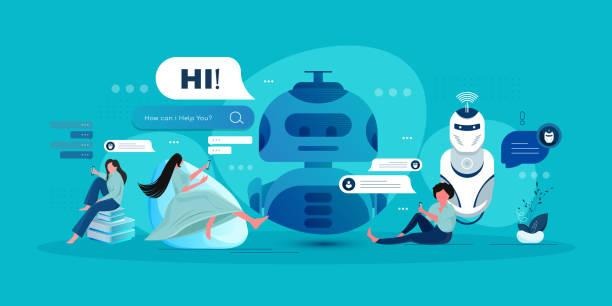
An AI chatbot is a piece of software program enabled by Artificial Intelligence that may talk to people in standard human language. Unlike the traditional rule-based chatbots, which depend on a mode of questions and scripted answers, the modern AI chatbots have the capacity to comprehend queries, read up on context, and provide more flexible replies.
Businesses use them for various purposes, such as:
- Answering customer questions
- Providing product recommendations
- Qualifying sales leads
- Booking appointments
- Taking care of typical support concerns.
- Using keyword searches to find comparable information in company knowledge bases
- Collecting customer information
- Providing live assistance to users.Assigning to human agents.
- Help employees when they have doubts.
Other systems can respond if they are sufficiently sophisticated. For instance, such a chatbot can gather information from a customer, verify an order, open up a support ticket or organise a meeting using integrated business software.
Key Features to Look For in an AI Chatbot
Strong Knowledge Management
Your chatbot should be able to access the right data about your business. Search for platforms that can accommodate your website content, FAQs, product details, policies, documents, and other reputable sources. Inquire about how easy it is for your team to update this information. As long as your chatbot is operating on old policies, even after updating them, it can create bigger issues for customer service than resolving them. To answer questions, some modern platforms will retrieve relevant information from connected knowledge sources, called retrieval-augmented generation or RAG. This will allow you to get answers from the AI that are specifically related to your business and not just what it has been trained with.
Reliable Human Handoff
Do not have AI respond to all conversations. Some have complex issues, have something sensitive to attend to, and/or make an unusual request – you may need to speak with a person after all.
See what happens when the chatbot is unable to assist you. A good handoff should allow the customer not to have to repeat the whole conversation.
Seek out such things as:
- Live agent transfers
- Support ticket creation
- Email escalation
- Conversation history
- Agent notifications
- Handle routing – depending on the type of issue.
A seamless transition can make a world of difference to AI involvement. A seamless transition can make a world of difference to the AI engagement.
Useful Integrations
Your chatbot looks more useful when it is able to utilize the software your business is already utilizing.
Depending on your needs, you may want integrations with:
- CRM platforms
- Help desk software
- E-commerce platforms
- Calendars
- Marketing tools
- Payment systems
- Internal databases
Note integration depth. A chatbot that does nothing more than a customer notification in your CRM isn’t nearly as useful as one that reads customer information and updates it safely on your CRM.
Analytics and Reporting
To know if your chatbot is helping or not requires data.
Useful analytics include, but are not limited to:
- Number of conversations
- The percentage of the total that was resolved or contained.
- Human escalation rate
- Common unanswered questions
- Conversation drop-off points
- Customer satisfaction
- Lead conversion
- Response performance
Security and Data Privacy
Security should be foremost if they will be handling information belonging to customers or accessing internal systems.
Ask some questions before picking a provider:
- Where is customer conversation data contained?
- How does the company look after personal information?
- Are there any security controls?
- Who can access chatbot data?
- Is there documentation of relevant compliance and safety measures provided?
- Is there any control over data retention?
The compliance and legal needs will vary depending on the industry and location. These requirements need to be clustered carefully for businesses that use information about people.
How Much Does an AI Chatbot Cost?
The pricing of AI Chatbots differs. AI Chatbot costs come in a wide variety. They can also use a monthly subscription or have subscription prices based on users, conversations, AI resolution, or usage.
You may encounter:
- A large selection of free or affordable chatbot options for basic capabilities.
- Billed branch office or small DP plan based on a monthly subscription.
- Pay-per-use for AI dialogue.Paying for AI conversations based on usage.
- Call-in pricing is based on the decision of the charge resolution.
- Custom enterprise pricing
- Development costs for custom solutions: One-time
Price isn’t the only factor. Take into account the total cost of ownership components such as setup, integration, ongoing maintenance, further use of AI, and support. If it has very high use fees or a ton of developer effort is required, it could cost you more.
Common Mistakes to Avoid
A typical pitfall is selecting a chatbot that impresses visitors with an eye-catching demo. A platform can function just fine on simple questions, but it does not function on the actual conversations that your customers have. Try out the chatbot on real-life instances of your business. Put a variety of tricky, baffling, and weird questions.
The other error is neglecting the human resources that will be operating the platform upon its launch. Your chatbot could become out of date as time goes on, if each content update requires a developer. Also, don’t start without specific performance targets. Has a clear idea of what success looks like prior to deploying. You may want to cut back on repeat support requests, boost qualified leads, enhance reaction times, or enhance appointment bookings.
How to Compare AI Chatbot Platforms
Make a basic evaluation score sheet before contacting vendors. Give each platform a rating with the criteria you think best for your business.
Consider:
- Use case fit
- AI response quality
- Knowledge management
- Human handoff
- Integrations
- Security and privacy
- Analytics
- Ease of management
- Scalability
- Total cost
Afterward, conduct a test of top selections with genuine business situations.
There are more resources available at ChatbotsAI.net to cover AI chatbots, conversational artificial intelligence, automation, and other technologies to help you make a better-informed decision.
Best Practices for Implementing an AI Chatbot
- After picking a platform, begin with a vertical scenario, not all things at once!
- Have a knowledge base ready to go before launch. Scrub away stale content and ensure that your policies, product information, and FAQs are correct.
- Establish ground rules for escalation. Your chatbot needs to know when and how to discontinue its attempt at solving a concern and involve a human.
- Observe discussions following launch. Scrutine peered at the incorrect answers and blank questions often. These discussions reveal the areas in which you can improve the information you provide your customers.
- Last but not least, consider your chatbot a continuous project. Customer desires, products, policies, and business processes evolve. Your AI chatbot’s mission should evolve alongside them.
Frequently Asked Questions
What is the best AI chatbot for a small business?
This will vary based on your objectives and resources. A small business might require a low-cost software application, hassle-free to handle, and with features such as inquiry generation, service, or booking.
Can an AI chatbot replace customer service agents?
An AI chatbot can respond to numerous routine inquiries without human interaction, yet in all conditions, it’s not a substitute for a human. Human judgment is frequently needed in complex situations, when sensitive issues are at stake, and high-dollar customer interactions occur.
Should my chatbot connect to my CRM?
For sales-related use, qualified lead generation, or customer service interactions, CRM integration is invaluable. It can track conversations and engage leads more quickly and effectively on your team.
How is my chatbot working?
Monitor the resolution rate, escalation rate, customer satisfaction, questions that are not answered, lead conversions, and the volume of conversations. It’s the right metrics that will depend on your original business goals.
Is an AI chatbot secure?
Some may provide no security, some offer basic, and some offer robust. Once more, you should check on the platform’s data handling process, access management, security measures, and compliance papers before finalizing your decision for it. Those organizations that manage sensitive data ought to conduct further due diligence.
Conclusion
Instead of choosing one platform for its feature list, consider whether it can solve your problems and fit into your current operations. Seek out robust knowledge management capabilities, trustworthy human-to-human handoff, helpful integrations, analytics, security, and clear pricing. Use customer questions and scenarios to test any platforms you’re thinking about before investing. The goal of the right AI chatbot should be to streamline your customers’ and employees’ lives for the better. With use cases, reasonable expectations, and constant optimization, it can become a practical element in your customer service, sales, and business operations strategy. While considering the best option for your organization, check out ChatbotsAI.net, a resource for AI-related tools, conversational AI, AI assistants, and business automation.