Conversational AI Chatbot vs. Assistants: Employee Experience in a New Era of Workplace Interaction
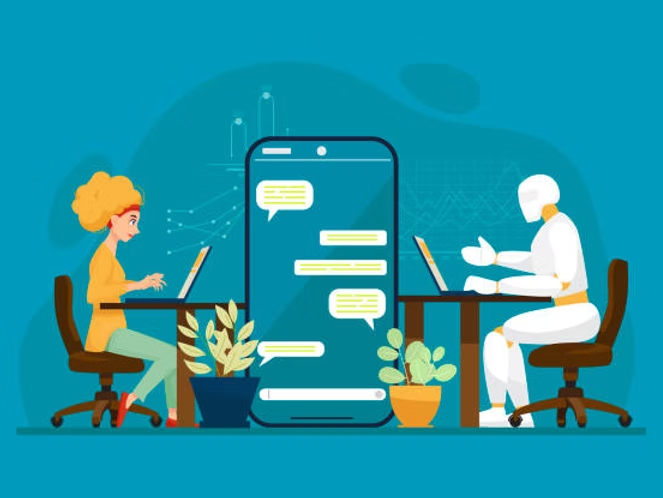
Conversational AI Chatbot vs. Assistants: Employee Experience
The modern workplace is changing rapidly. Businesses are looking for better ways to increase productivity, reduce repetitive work, and make communication easier for employees. Two technologies that can contribute to these goals are conversational AI chatbots and digital assistants.
Although they may appear similar, they serve different purposes. Conversational AI chatbots are generally designed for scalable communication and workflow automation, while digital assistants often focus on helping individuals manage tasks and information.
Understanding the difference between the two can help organizations choose the right technology—or use both together—to create a more efficient employee experience.
What Is a Conversational AI Chatbot?
A conversational AI chatbot is a software system designed to communicate with users through natural language. Employees can ask questions, request information, or complete certain tasks through a conversational interface.
Modern chatbots can use AI and natural language processing to understand requests and generate relevant responses. When connected to company systems, they may assist with areas such as:
- HR questions
- Company policies
- Internal knowledge
- Customer support
- Workflow requests
- Employee onboarding
One of their major strengths is scalability. A chatbot can potentially assist many employees simultaneously, making it useful for organization-wide support.
What Are Digital Assistants?
Digital assistants are AI-powered tools designed primarily to help individual users complete tasks or access information.
Common examples include voice and productivity assistants that can help users:
- Manage calendars
- Set reminders
- Organize tasks
- Search for information
- Manage certain communications
- Perform voice-controlled actions
Their focus is often more personal than organizational. Rather than supporting an entire workforce through one shared system, a digital assistant typically helps an individual manage their daily activities.
Key Differences Between Conversational AI Chatbots and Digital Assistants
The differences become clearer when comparing their primary roles.
| Area | Conversational AI Chatbot | Digital Assistant |
|---|---|---|
| Primary purpose | Communication and workflow automation | Individual assistance |
| Main users | Employees, customers, or teams | Individual users |
| Scalability | Can support many users simultaneously | Primarily focused on one user |
| Interaction | Often text-based or embedded in business systems | Often voice, mobile, or personal interfaces |
| Business integration | Can connect with HR, CRM, knowledge bases, and workflows | Often works within a particular assistant ecosystem |
| Best suited for | Organization-wide support and automation | Personal productivity and task management |
Neither technology is automatically better. Their usefulness depends on the problem an organization is trying to solve.
How Conversational AI Chatbots Improve Employee Experience
Employees frequently spend time searching for information or asking colleagues the same questions. A conversational AI chatbot can reduce this friction by providing information through a single conversational interface.
For example, an employee might ask:
“How many vacation days do I have?”
If the chatbot is connected to the appropriate HR system, it could retrieve the relevant information without requiring the employee to search through multiple systems.
Chatbots can also support onboarding by answering questions about company policies, procedures, benefits, or internal resources.
The result can be less repetitive work for HR and support teams while giving employees faster access to information.
How Digital Assistants Help Employees
Digital assistants are particularly useful for individual productivity.
An employee might use an assistant to:
- Schedule a meeting
- Set a reminder
- Organize tasks
- Draft or manage communications
- Find information quickly
- Manage personal workflow
For employees who regularly manage busy calendars and multiple responsibilities, these capabilities can save time throughout the workday.
While a chatbot may answer a question shared by hundreds of employees, a digital assistant may help one employee organize their individual schedule.
Why Businesses May Need Both
Organizations do not necessarily need to choose between conversational AI chatbots and digital assistants.
The two technologies can complement each other.
For example, a company could use a conversational AI chatbot to answer HR questions for its entire workforce while employees use digital assistants to manage their individual calendars and reminders.
This creates two layers of support:
Organization-level AI: Chatbots provide shared information and automate common workflows.
Individual-level AI: Digital assistants help employees manage personal productivity.
Used appropriately, the combination can create a more efficient and flexible employee experience.
Benefits of Conversational AI Chatbots and Digital Assistants
Both technologies can contribute to workplace improvements.
Better Communication
Employees can access information without relying entirely on manual communication.
Time Savings
Automation reduces repetitive tasks and allows employees to focus on higher-value work.
Personalization
AI tools can adapt interactions to individual needs, depending on their configuration and available data.
Scalability
Conversational AI chatbots can support large numbers of employees simultaneously.
Improved Productivity
Digital assistants can help individuals organize tasks, while chatbots can streamline broader business processes.
Privacy and Employee Trust
Introducing AI into the workplace also creates important privacy considerations.
Employees may be concerned about what information AI systems can access and how their interactions are stored or analyzed. Organizations should therefore communicate clearly about:
- What information the system collects
- Which business systems it can access
- How employee data is protected
- How long information is retained
- Who can access the data
Transparency can help employees understand the purpose of AI tools and feel more comfortable using them.
Challenges of Implementing AI in the Workplace
Despite their potential benefits, conversational AI chatbots and digital assistants also present challenges.
Integration Complexity
Connecting AI tools with existing HR, CRM, communication, and workflow systems may require technical work.
Privacy Concerns
Organizations must handle employee information responsibly and establish appropriate access controls.
Training Requirements
Employees may need guidance on how to use AI tools effectively.
Accuracy
AI systems can sometimes misunderstand questions or provide incorrect information. Important business decisions should therefore have appropriate human oversight.
Over-Automation
AI should support employees rather than eliminate valuable human interaction. Some workplace situations require empathy, judgment, or human decision-making.
E-E-A-T and Responsible Workplace AI
The E-E-A-T framework—Experience, Expertise, Authoritativeness, and Trustworthiness—can also provide a useful perspective when evaluating workplace AI.
Experience
Organizations can assess how AI performs in real workplace situations and gather employee feedback.
Expertise
IT, HR, and business teams should understand how the technology works and where its limitations lie.
Authoritativeness
Organizations should evaluate the credibility of the technology providers and information sources behind their AI systems.
Trustworthiness
Clear privacy policies, appropriate security controls, transparency, and human oversight are essential for building employee trust.
The goal should be to use AI to improve the employee experience without compromising privacy or human-centered workplace practices.
The Future of AI and Employee Experience
The workplace is increasingly combining automation with human creativity and decision-making. Conversational AI chatbots may become more deeply integrated with internal knowledge bases, HR systems, support platforms, and business workflows.
Digital assistants may also become more personalized, helping employees manage increasingly complex schedules and tasks.
Rather than replacing one technology with another, businesses may increasingly use both conversational AI chatbots and digital assistants for different purposes.
The most effective approach will be to identify where employees need organization-wide assistance and where they need individual productivity support.
Conclusion
The comparison between conversational AI chatbots vs. assistants for employee experience is not necessarily about choosing a single winner.
Conversational AI chatbots are particularly valuable for scalable communication, shared information, and business workflow automation. Digital assistants are better suited to individual productivity, scheduling, reminders, and personal task management.
When implemented thoughtfully, both can work together to create workplaces that are faster, more accessible, and more productive.
The key is to use AI as a tool that empowers employees rather than replaces meaningful human interaction.
FAQs
What is better for employee experience: a conversational AI chatbot or a digital assistant?
It depends on the objective. Conversational AI chatbots are generally better for organization-wide communication and automation, while digital assistants are more suitable for individual productivity and task management.
Can digital assistants replace conversational AI chatbots?
Not completely. Digital assistants and conversational AI chatbots serve different purposes. Chatbots can support teams and business workflows at scale, while assistants typically focus on helping individual users.
Can businesses use both technologies?
Yes. Businesses can use conversational AI chatbots for shared employee support and digital assistants for individual productivity, allowing the two technologies to complement each other.