
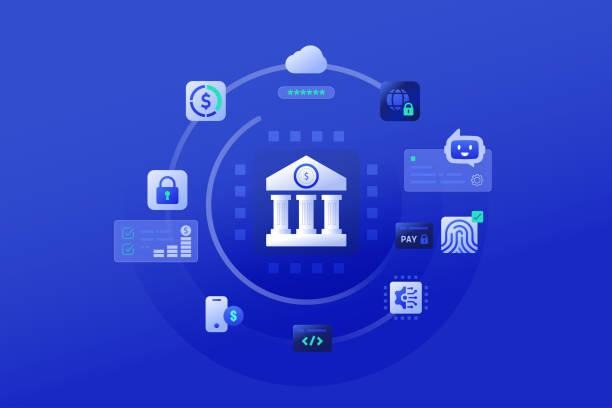
Conversational AI in Banking
The local branch is far behind when it comes to banking. Nowadays, customers can view their balances, their transactions and ask questions online via websites and applications on their phones. When things are wrong, they expect some speedy assistance. In order to improve the level of digital service, banks have a viable route to choosing what digital improvements to make without having to wait a human for everything.
AI chatbots offer a convenient way to answer general questions, help users navigate digital applications, and offer basic support whenever needed. They also can be used to assist banks in handling their busy seasons. Here at ChatbotsAI.net we have a passion for delivering, customer knowledge and convenience in the best ways with AI, and clear communication.
What Is Conversational AI in Banking?
Conversational AI in Banking represents AI systems that communicate with customers in natural language. Natural language communication with customers is represented by AI systems with Conversational AI in Banking) symbol. There is a dedicated service on a bank’s website and/or app that allows customers to type their questions and then get helpful answers. Certain systems can also be used for voice communication.
They can answer basic inquiries including information on the various features of the account, the types of cards available, details on branches and what banking processes are involved. They should not be used in place of a secure system or human decision-making. Rather, they are able to guide the consumer to the information they need plus point them towards the correct support office.
How Does It Work?
The initial step in using AI for banking is to determine what tasks the customers need to perform. The system can serve up common questions, enumerations of digital services, or provide a redirection of customers to the relevant portion of an app. It is important to set boundaries so that it is safe and helpful.
When customers type a message a request, AI studies the request and chooses the apposite reply. In cases where personal knowledge and expertise from an account are required for assistance, the system can “route” the conversation over to a trained employee. This really establishes a nice parallel with automation and personal service.
What are its benefits for Digital Customer service?
The high speed is one of the major advantages of Conversational AI in Banking. Customers are provided with answers without having to wait, on hold or through long help pages. This can help to alleviate the anxiety that can be associated with basic banking activities.
Another way that AI can help is by offering support out of business hours. A Customer could be asking a question late in the night, or during the weekend. The chatbot can handle basic tasks, but if not all tasks, be able to give basic information and what steps are next.
Key features that banks can use.
Banking Chatbots can be leveraged to provide information on frequently asked questions, guidance on banking services, appointment details, and educational courses on general usage of banking account. They can also steer the customers to secure web pages or assisting resources.
A good one is the ability to look through the conversation History for an active conversation. This can help to eliminate repetitive questions by customers. Even with the ability to protect sensitive information, banks should continue to observe good security measures and refrain from making sensitive information available in an unsecured chat.
Real-World Uses
A bank could uses Conversational AI in Banking to respond to inquiries relating to the activation of a card, dates that a payment will be made, or account services in general. Someone might pose a simple question and get a response in just a few seconds.
AI can also help banks to provide insights on digital features. For instance, you might wish to show a client how to obtain a statement, or how to use a mobile banking function. The chatbot can give straightforward instructions or direct to the appropriate portion of the application.
Pros and Cons
The greatest benefit is that it is easy. The customer can answer routine queries quickly and the support team can take up resolving issues that are more complex. AI can additionally aid in dealing with a large volume of simple requests.
Important restrictions. Banking activities contain delicate data; therefore, security and privacy have to be a concern. AI may be able to misinterpret a question. Banks should offer clear human support if there is a problem which is then not safe to resolve through automation.
Best Practices
The Strong Conversational AI in Banking is narrow and useful and always begins with a purpose. Banks should opt for common problems faced by its customers for which AI can do well. The automation of a task should not take place, unless it is actually needed.
Clarity of language is important, too. Customers need to be aware of the times that they are interacting with an AI system. Simple directions and facility to call for human help are essential in banks. We believe it’s vital to regularly test, review, and update to ensure reliable experience with your chatbot at ChatbotsAI.net.
Common Mistakes
One of the common pitfalls is assigning too much to the chatbot. Do not include important decisions within a system that must be made by trained personnel or reviewed. It should not overstep its bounds.
The other thing is that people put in information that’s not clear in response to the security question.Another error is to providing vague information regarding security. It’s important for customers to know the details about them that they never should disclose in a chat. Banks should also ensure that their response is up-to-date and is easily understood by consumers.
Creating trust and security
It is imperative when you relate to them that you have trust, whether you use them or not. Customer must be assured accuracy of information. Banks need to discover within prompt time if there are responses which need testing and errors need to be rectified.

They must also be made into a priority for privacy. Customer data must only be utilized in an AI system when and if it is warranted and allowed. Banks also need to ensure that there is protection for sensitive data, and the ability to provide secure ways to undertake specific tasks within an account. A good chatbot should never urge the customers to share passwords, security codes, or any other private information via an insecure means.
Measuring Success
If the service goals are clearly defined, banks will be able to gauge the performance of their chatbots. Examples of metrics that can be useful range from response time, customer satisfaction, successful use of self-service, to the number of cases that are escalated to human agents.
Banks ought to examine chip shortfalls, as well. These interactions will uncover information or misinformation that is not included or the instructions may not be clear. Conversational AI in Banking is more valuable when banks improve the system based on customers’ feedback as they make one initial launch and then add more.
Conclusion
Using digital customer service can speed up and ease customer service. Can provide basic information to customers while it’s not working hours, can give basic guidelines to the digital services, etc. All these benefits can help adoption of resources to help improve convenience, as well as stress on supporting teams.
Frequently Asked Questions
What are the areas of value that banking chatbots can leverage?
They are capable answering general enquiries, handling banking queries, giving general guidance and directing to useful resources. They play a specific role, depending on systems implemented at the bank and its security regulations.
Can AI be a substitute for bank employees?
No, AI can process routine requests, but it is very important to have employees in the thick of things when there’s a sensitive issue or one that calls for more human judgment in making decisions.
Is Conversational AI in Banking secure?
Security can be strengthened, but banks have to be careful about access, data and information of the customers. Customers are advised to protect their banking accounts and never share their passwords, security codes or similar in chats.