
Artificial Intelligence tool ChatGPT is one of the most popular worldwide in a few months. It has grown from a chatting and talking chatbot to a practical technology that’s used in the business arena to write, research, solve customer issues, code, analyse, brainstorm and much more.The more important question for business owners is: Will ChatGPT ever be able to generate text? The real question is how your business can implement it properly to save time, enhance workflows, and assist staff to work more effectively. ChatGPT is a versatile tool that can be applied to various tasks and challenges in businesses of all sizes. A small business may employ it for composing emails and generating marketing concepts, while a bigger organization might incorporate AI into customer support, internal procedures, sales, and data handling. This guide can tell you what ChatGPT is, how it functions, what companies can do with it, its drawbacks, and the best practices that companies should adhere to when integrating it into their day-to-day business.
What Is ChatGPT?
ChatGPT is a Generative AI solution created by OpenAI that enables users to communicate with AI using natural language. A question can be typed along with an instruction and information, and the system will provide a response in response to your question and conversation context.
The fundamental aspect of ChatGPT is that it operates on a very large language model to understand your commands and provide answers to them. The model reads your prompt, grasps its meaning and generates a plausible continuation of the text that it has been trained to do.
For instance, as opposed to asking:
“Write an email.”
You could provide more useful instructions:
Write a friendly 150 word email to a customer that ordered two days ago and has been waiting for the order to arrive. Apologize for the wait, let them know that it still hasn’t arrived, and tell them the next step.
The second prompt provides Chat GPT with more context, facilitating the creation of a more useful initial draft.
But companies need to keep in mind, ChatGPT may get things wrong. It can answer in a way that provides false facts, vague context or unrelated claims. Attention be given to key outputs before they are used by employees with customers, or to consider for business decisions.
How Businesses Use ChatGPT
The range of potential applications for ChatGPT in business is growing. Let’s take a look at some of the few ways companies are employing it today.
Customer Service
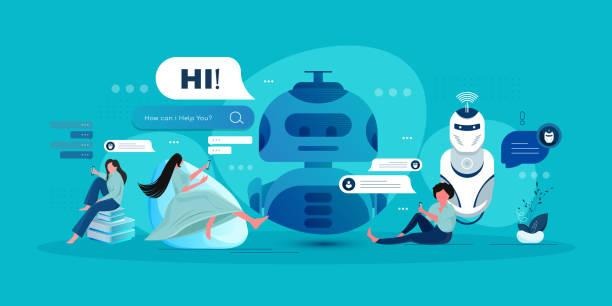
A very evident application of conversational AI for businesses is customer service. Businesses can leverage ChatGPT-powered systems to provide assistance with frequently asked questions regarding products, services, policies, operating hours, and more. When integrated with the right business systems and knowledge assets, AI can also enhance customer interactions in a more personalized manner.
For instance, an e-commerce platform could have AI support to assist customers in searching for products or to answer questions regarding shipping and returns. One could be used by a service company to answer the most frequently asked questions and then pass the more complex cases to a service person. The aim is to be able to manage repetitive requests efficiently as well as to enable the individual employee to give his/her judgment regarding problems that demand personal attention.
Content Creation
Marketing teams can leverage ChatGPT to accelerate various aspects of content generation.
It can help with:
- Blog outlines
- Social media ideas
- Email drafts
- Product descriptions
- Ad copy variations
- Video scripts
- Content briefs
- Headline ideas
But businesses should be careful not to publish content that has been created by AI without it being reviewed by a human. For any successful marketing content, you’ll need knowledge of the brand, original ideas, precise information, and understanding of the target audience.
One strategy that can be used is that of using ChatGPT as an assistant rather than a replacement for your content team. It can take you from a blank page to a viable draft, then your team can add the expertise and personality to make it valuable.
Research and Summarization
Consulting and reading documents and reports can be a time consuming task. ChatGPT can be used to summarize long content and word complex topics. For instance, an employee might use it to discover the key points of a lengthy report without reading the entire report.
AI can also help structure research questions, brainstorm topics, and prioritize areas for further research for businesses. But it’s not a final source of truth to be used always and without question. When researching legal, financial, medical or technical or other topics involving high stakes, check the important items using reliable, primary sources.
Sales and Marketing
ChatGPT can assist sales teams with numerous repetitive tasks.
For example, it can help sales representatives:
- Draft personalized outreach emails
- Create follow-up messages
- Prepare meeting questions
- Summarize customer notes
- Brainstorm responses to common objections
- Create sales scripts
- Organize information about prospects
It can also be valuable for marketing teams to brainstorm ideas for campaigns, tweak messages to resonate with various audiences, and create variations of existing copy. AI can be a component of a bigger sales and marketing process with the appropriate combinations. Personalization, however, should not be based on inaccurate customer data, but on accurate data.
Internal Employee Support
Businesses can use AI assistants to help employees find information faster. Now picture a new employee who must learn a company’s vacation policy, on-boarding procedure, or expenses. They could ask their AI assistant a question and get a quick answer using trusted company data, rather than wading through multiple documents. This kind of system can minimize repetitive queries from HR and operations staff, and assist staff in self-service. The information passed to the AI will influence the quality of the experience. It is important for business organisations to maintain accurate, well-documented and timely records. This kind of system can minimize repetitive queries from HR and operations staff, and assist staff in self-service. The information passed to the AI will influence the quality of the experience. It is important for business organisations to maintain accurate, well-documented and timely records.
Coding and Technical Work
The software developer and technical teams can also benefit from ChatGPT. It can clarify complex code, provide simple code snippets, detect buggy code, document code, and present ideas on how to solve a technical issue. AI-generated code still needs to be reviewed and tested by the developers. A correct looking solution could have a security vulnerability, an outdated use of security, or have incorrect logic. By eliminating mundane coding tasks, ChatGPT can free up development time when used correctly and ensure developers can continue to test, design, and secure the code while maintaining the autonomy to make the final decision.
Translation and Communication
ChatGPT can help businesses overcome language barriers and communicate with customers overseas. It can be used to compose e-mails, convert documents, and modify messages to suit various languages. This may be helpful in early drafts and to keep things moving for regular communication. If you need to know what the translation means, then you should employ qualified human translators or reviewers for legal documents, contracts, or especially when you are communicating with customers who are sensitive.
The Limitations and Risks of ChatGPT
As great as ChatGPT is, there are some things that it might not be able to do.However, there are things that ChatGPT may not be able to do, and businesses should be aware of this. The key concern is the accuracy. The information generated by AI can be convincing, but incorrect. Don’t assume that all responses are accurate; employees should verify important claims. Privacy is also something they are concerned with. It is crucial for businesses to have clear policies concerning the kinds of information employees can input into AI tools. Personal or confidential information from the company pertaining to its customers, passwords, proprietary information etc. should be managed in accordance with company security protocols and the respective conditions of the AI service in use. Compliance and accountability, bias and intellectual property (IP issues) should also be taken into consideration. There should be a person within the organisation who is responsible for making sure that the work done with Ai is completed properly particularly if it impacts on customers or vital business decisions.
Frequently Asked Questions
Can ChatGPT replace employees?
ChatGPT can streamline automation aspects of tasks and provide assistance, but not replace human judgment, creativity, expertise or accountability. While AI cannot replace human effort completely, it can serve as a valuable tool for tasks that lend themselves to automation.AI can be a helpful piece, rather than the whole mainstay of business operations.
Is ChatGPT safe for business use?
If the security, privacy and governance policies are developed appropriately, it can be used safely by companies. It is vital for businesses to be aware of the way their individual ChatGPT services handle data, and never share sensitive information without the proper authorization.
Can ChatGPT improve customer service?
Yes. ChatGPT systems can be integrated into a business to respond to frequent customer queries, offer information and assist with customer engagement. More complicated cases should be sent to human agents as necessary.
How can employees get better results from ChatGPT?
Provides clear instructions, context, examples, formats and requirements, employees have a positive opportunity to improve the results. It would be advantageous for them to examine the output in addition to believing it word for word.
Conclusion
For businesses seeking to enhance productivity and decrease time spent on repetitive tasks, ChatGPT has proven to be a reliable and efficient solution. There are diverse ways businesses can use it from customer service to creating content and even for research purposes, sales, coding, and even within the back office for internal support. The best remedy is to use ChatGPT as a support employee. It can assist your staff to brainstorm, arrange ideas, draft texts and perform repetitive tasks more quickly. It is other people’s expertise, judgment, creativity, and final review that should be called for from your employees.
The technology can provide valuable benefits to businesses that are aware of their specific situations, secure sensitive data, validate critical product components and implement reasonable guidelines. In the evolving landscape of AI, the ability to responsibly harness ChatGPT’s capabilities can serve as a key component in enhancing business processes while maintaining human expertise. With the continued development of AI, learning to leverage ChatGPT in a responsible way can be integral to improving business workflows without sacrificing the human element behind sound business decisions. You can learn more here about conversational AI, AI chatbots, customer service automation, and other technologies at ChatbotsAI.net.