Google Cloud Chatbot: How Google Cloud Chatbot Solutions Support Modern Businesses

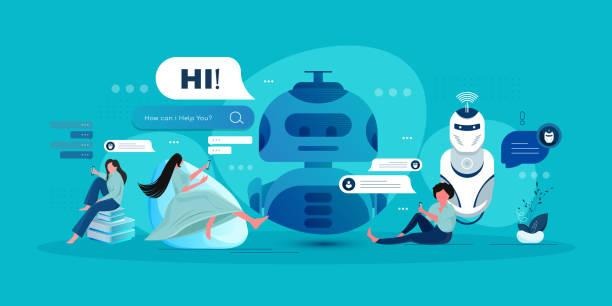
Busy businesses require faster service, smarter automation, and delightful customer experiences no matter which channel they choose. A google cloud chatbot can help provide all of these benefits by blending conversational AI with scalable infrastructure and flexible integrations that lighten workloads while enhancing response quality.
Features to Look for in a Google Cloud Chatbot
The best chatbots understand intent, route requests, and deliver instant replies while connecting to back-end systems that store order data, appointments, or customer account records.
Having both features is important. Not only do users want quick assistance without having to repeat themselves, but your team can also enjoy faster resolutions when automated bots handle frequently asked questions. This allows staff to focus on individuals who need more attention helping to improve retention while also freeing up cycles for other work.
Benefits of Google Cloud Chatbots
By hosting your bot in the cloud you can avoid many of the limitations associated with on-premise software. Apps deployed to Google Cloud can easily keep pace with traffic spikes, power distributed teams, and adapt on-the-fly with changes to your business.
Agents also benefit from a cloud solution. Whether visitors are using your website, mobile app, or chatting via Facebook the same bot can serve all of these channels. Having a single source of knowledge helps ensure your customers are getting consistent answers while assisting agents with routine inquiries.
- Increased chatbot coverage can help reduce response times.
- Automated bots free up staff to focus on issues that require human intervention.
- Chatbots on Google Cloud expand when traffic increases, and shrink during downtime to optimize costs.
- Google’s NLP reduces the need for custom intents.
- Single bot surfaces mean customers receive consistent service.
- Bots on Google Cloud can be updated rapidly so you can improve experience over time.
Collectively, these advantages are why a growing number of organizations are starting to treat conversational AI as foundational technology instead of an interesting experiment. At the right scale, chatbots offer your organization a path towards operating more efficiently today and scaling for demand tomorrow.
Google Cloud Chatbot Advantages
Google Cloud enables developers to craft conversational experiences that actually feel useful. Natural language processing helps your chatbot understand intent, and built-in analytics show you where conversations are succeeding (or falling short).
You can also integrate your bot with order management systems, helpdesk software, and CRM platforms to unlock customized interactions based on who the user is. Suddenly, people can check delivery times, unlock passwords, or make reservations without putting agents on hold.
Common Chatbot Use Cases
Chatbots tend to shine when tasked with chewing through rote work that eats into staff time but doesn’t require substantial decision making. For service-facing teams, this commonly includes answering FAQs, gathering lead data, scheduling meetings, and routing contacts to the correct team member.
It’s also possible to configure chatbots for employee assistance. Staff members can inquire about HR policies, technology access, or onboard tasks and receive immediate support instead of digging through corporate wikis or waiting on internal email chains to deliver slow responses.
- Use chatbots to automate service-level tasks 24/7.
- Leads can be automatically captured from visitors while humans are unavailable.
- Reduce friction by allowing customers to book services directly.
- Improve employee experience by creating an internal bot.
- Increase customer satisfaction by providing order updates.
You’ll notice one thing these capabilities all have in common. By deploying chatbots for the right use cases, your organization can realize a quantifiable benefit in a short period of time. Look for reductions in support volume, improved wait times, and higher conversions from site visitors who receive timely assistance.
Design Considerations for Chatbots
To build the best experience, teams must start with a strategy. Any chatbot you create should go after well-defined problems initially rather than attempting to automate every possible pathway right away.
The way you design conversations is also critical. Avoid frustrating users by providing clear prompts, offering helpful fallback responses, and crafting seamless handoff experiences for when bots can no longer meet customer’s needs.
Finding the Right Chatbot Platform
Don’t settle for base-level language understanding when choosing a platform either. Any solution worth its salt should make it easy to connect secure authentication, customize actions with webhook extensions, analyze conversations through intuitive dashboards, and offer omnichannel support.
Last but not least, make sure you can test your bot before going live. Having visibility into every conversation path will help you tweak responses, minimize mistakes, and adapt to changing customer expectations without having rewrite major portions of your bot over time.
- Ensure your chatbot platform provides secure access to sensitive data.
- Look for seamless API integration to connect your bot to everything else your business uses.
- You should be able to test every conversation path.
- Make sure your bot can be integrated into every channel your business uses.
- Errors will happen. Choose a platform that allows you to escalate to a human when needed.
Taking the time to prioritize these features will help you deliver better experiences from day one. It also makes it easier to add new use cases as your organization develops confidence in conversational technology.
Knowing When to Connect With Human Agents
Humans should always be an option if customers run into complex issues, get angry, or have questions that require empathy. This is why it’s critical to have human handoffs whenever necessary. A google cloud chatbot should know its limitations and pass the user onto the right teammate.
Context is king during these transitions. Your team will be able to resolve issues quicker and without making someone repeat themselves if they can see why the bot forwarded the conversation in the first place.
Best Practices for Chatbots
While it’s impossible to create a perfect bot right away, you can ensure future improvements are driven by data. Capture meaningful metrics that matter to your customers (and boss) like containment rate, response time reduction, and lift in conversion or speed of resolution at handoff.
Analytics tells only part of the story. Regularly scheduled review sessions help you gather qualitative feedback too. Ask yourself why users got stuck, which responses were confusing, and where your bot should focus on adding deeper automation during next year’s planning cycle.
BUSINESS leaders love to measure everything. But as long as your KPIs are rooted in real-world customer interactions you can safely iterate on what works and eliminate experiments that fall flat. Do this enough and you’ll start to build a persuasive case that chatbots actually help – something many teams struggle to do internally.
Developing a Successful Chatbot Strategy
Successful chatbots evolve slowly by rolling out use cases that align with immediate business needs. You may start with lead capture and discover later that sales support, employee service workflows,
and multi-language support are just as achievable when you’ve fine-tuned your chatbot for your organization’s largest marketplace.