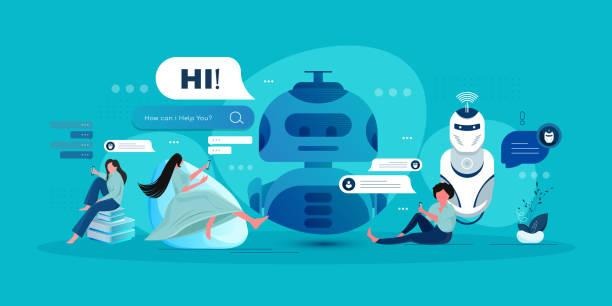

There’s a specific moment in a chat conversation where you can tell you’re talking to something rigid — a reply that technically answers the question but reads like it was assembled from a template. The most intelligent ai chatbot systems avoid that moment almost entirely. People think that natural conversation is about being smart but that is not the case. Natural conversation is about being good at the things like using different words and speaking at a good pace. It is also about making comments like a human would do without even thinking about it. The difference between a conversation that’s technically correct and one that actually feels like talking to someone is very small. However this small difference is what customers notice the most about conversation. They may not be able to explain why. They can tell the difference, between natural conversation and a conversation that does not feel natural. Natural conversation is what makes customers feel like they are talking to someone, not a machine.
The Small Things That Make Conversation Feel Human
None of these are flashy. All of them add up:
- Varied sentence rhythm. Real people don’t answer every question with the same sentence length and structure — natural systems mix it up too.
- Brief acknowledgments before answering. A quick “got it” or “makes sense” before diving into the answer mirrors how actual conversation flows.
- Appropriate follow-up questions. Asking one relevant clarifying question, instead of either guessing or demanding a full form’s worth of detail.
- Consistent personality across a conversation. Tone shouldn’t swing wildly between messages — it should feel like the same “person” throughout.
Where Older Systems Broke the Illusion
It helps to know what specifically felt robotic about earlier chatbots:
- Identical phrasing every time. The same canned greeting on every visit, regardless of context, was an instant tell.
- No memory within the conversation. Forgetting what was just said forced people to repeat themselves constantly.
- Overly formal, stiff language. Nobody talks like a terms-of-service document, yet plenty of old bots did exactly that.
- Binary success or total failure. Either it understood perfectly or it completely broke — no graceful middle ground for partial understanding.
How This Actually Gets Built
Naturalness isn’t an accident — it comes from specific technical and design choices:
- Training on real conversational data. Not scripted dialogue, but actual messy back-and-forth exchanges that reflect how people really talk.
- Response variation built in deliberately. Systems designed to avoid repeating identical phrasing across similar questions.
- Tone calibration by context. A support conversation about a billing error should read differently than casual product browsing.
- Careful brand voice definition upfront. Businesses that define tone clearly before launch tend to get a far more consistent result.
Where Natural Conversation Still Matters Most
This isn’t equally important everywhere — a few contexts benefit the most:
- First-time visitor interactions. A stiff, robotic first impression sets the tone for how someone perceives the whole business.
- Sensitive or frustrating situations. Natural, warm phrasing matters far more when someone’s already annoyed about something.
- Longer, multi-turn conversations. Rigidity becomes more obvious the longer a conversation runs — short exchanges hide it better.
- Brand-heavy consumer experiences. Businesses selling on personality and tone need the chatbot to match that voice convincingly.
ChatbotsAI.net covers a related angle in its piece on how an intelligent AI chatbot delivers better customer experiences, worth reading alongside this one.
Natural Beats Merely Correct
The smartest ai chatbot is not always the one with the features. It is usually the one that does not feel like a machine during a conversation. Different ways of saying things a steady way of speaking and little friendly gestures in the conversation make more of a difference in how smart it seems than how much it can process. Companies that are looking at chatbot services should spend time looking at technical details and more time actually having a real long conversation, with the chatbot and paying attention to when it starts to feel awkward.
Frequently Asked Questions
What makes a chatbot feel more natural to talk to?
Varied phrasing, appropriate pacing, and small conversational acknowledgments matter more than raw accuracy alone.
Can natural-sounding chatbots still make factual mistakes?
Yes — fluency and accuracy are separate qualities, so a natural-sounding response can still be wrong if it’s not properly grounded in real data.
Does personality consistency really matter that much to customers?
It tends to, especially in longer conversations, where a shifting tone can feel jarring or untrustworthy.
How is natural conversation design different from just adding more AI?
It’s a deliberate design choice — training data, tone calibration, and response variation, not simply a bigger or newer model.
Is a highly natural chatbot harder to build than a basic one?
Generally yes, since it requires more careful training and tuning than a simple keyword-based script.
Should every business prioritize natural conversation equally?
Not necessarily — it matters most for brand-heavy, consumer-facing experiences and less for narrow, transactional use cases.
Related Reading on ChatbotsAI.net
A few related pieces worth linking to from this article:
- How an Intelligent AI Chatbot Can Deliver Better Customer Experiences — a natural link from the section on where natural conversation matters most.
- Conversational AI Chatbot: How Intelligent Conversations Are Changing Business — pairs well with the section on how this actually gets built.
- Most Advanced AI Chatbot Features: What Modern Businesses Should Expect — worth linking from the intro’s distinction between feature lists and genuine feel.
- Best Conversational AI Chatbot: Key Features Businesses Should Consider — fits from the section on where older systems broke the illusion.
- AI Customer Service Chat: How Businesses Are Automating Customer Support — a good anchor from the sensitive-situations discussion.