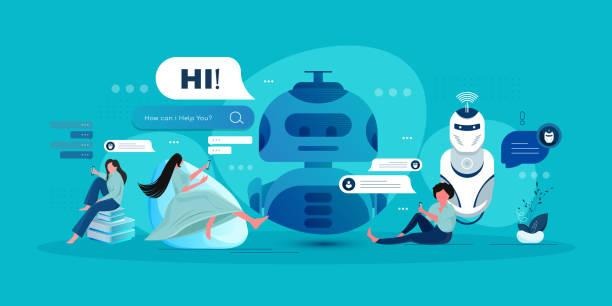
When customers need help immediately, slow support is worse than no support at all. LiveChat chatbot can automatically reply right away, direct visitors to the information they need, and prevent conversations from being dropped when teams are unavailable.
Exactly What Does a Livechat Chatbot Do?
LiveChat chatbots run inside your live chat window and can provide automated answers to common questions, qualify leads, and route conversations to the appropriate group. Chatbots act as a virtual support representative to instantly reduce wait time while preserving the customer journey.
Why does this matter? Because many customer requests are time-sensitive. Visitors don’t want to wait around for an agent to arrive when they have simple questions about pricing, products, order status, or troubleshooting. Automated responses allow you to instantly reply and keep the conversation alive until an agent is available to assist.
It can also set context for your team before handing over the chat. This means less repetitive questioning and more time focused on resolving valuable inquiries.
Why Does Real-time Service Require Automation?
If bots couldn’t keep up, we wouldn’t be having this conversation. In fact, customers expect nearly instantaneous responses. Speed is critical, but accuracy is just as important. Responses that take too long could lose a customer before an agent can respond.
Automation helps bridge that gap and allows customers to get their questions answered rapidly. It’s particularly useful in scenarios where live support is limited, such as high traffic periods, after hours support, and time zone differences.
- Immediately answers frequently asked questions.
- Prevents conversations from being dropped when agents are offline.
- Routes visitors to the appropriate team quicker.
- Eases the load on your support team when traffic is high.
- Delivers a consistent experience as the first point of contact.
Automated responses don’t replace human agents, instead, they allow humans to provide better service by handling mundane tasks. Together, they create a hybrid model of service that customers feel attended to without being overwhelmed by bots.
How Does Livechat Chatbot Reduce First Response Time?
First response is one of those measurable metrics that everyone strives to improve. LiveChat chatbots can acknowledge a visitor instantly, assure them that someone will help, and begin qualifying a lead before your agents even see the chat.
This way, your customers never feel like they are waiting for help. While it may not be able to solve every problem, automated replies can lift customer assurance until a support team member is available to take over the conversation.
LiveChat chatbots can even be used to prioritize your high value leads or urgent service inquiries. Qualification helps your team identify the most important conversations to escalate first and avoid unnecessary delays.
What Should Customers Receive From Instant Support?
Speed is important, but not at the sacrifice of clarity. If automated responses come across as spammy or confusing then people will hang up on the chat and ask to speak with an agent anyway. Instant support should simplify questions, guide users to next steps, and prevent them from having to repeat context later.
Simple words and phrases are easier to understand, but they should also sound natural. Nobody likes talking to a robot. Automated support should empower your customers with quick answers, but it should also sound friendly and conversational.
- Quickly builds trust with clear answers.
- Reduces friction with simple questions and menus.
- Prevents frustration with smooth handoffs to live agents.
- Helps users complete a task with relevant suggestions.
- Communicates like a human being instead of robot.
When customers receive fast and attentive service, they are more likely to engage with your bot and leave better satisfaction surveys. To see what we mean, check out chatbotsai.net for examples of strong customer chatbot interactions.
When Should Human Agents Respond?
Ideally, bots should recognize when they can’t handle something and pass the conversation over to qualified employees. Support teams should manually review conversations that require complex billing explanations, emotion, technical edge cases, or are specific enough to require personal assistance from a sales representative.
Ideally, the bot will transfer full context when handing off to a human agent. Nobody likes repeating themselves. When bots do hand off to actual humans it should be effortless and lazy customers shouldn’t have to reach back down to chat to find someone who can help them.
This ensures customers feel like they are being helped throughout the process (robotic efficiency) but also cared for when the situation turns complicated (human empathy).
How Do You Build Effective Chatbots?
Keep each flow focused on a single need. You can always add additional chats later once you identify common questions and tasks. Trying to do too much in one chat can overwhelm both your bot and your customers.
Start with real conversations. Look through your past transcripts to discover what visitors are asking your team most frequently. You’ll also learn where they tend to get stuck when engaging with your support team.
- Identify the most common questions your team receives.
- Keep replies brief and do not double ask for information.
- Provide users with buttons whenever possible.
- Always provide an option to transfer to a human agent.
- Review conversations to identify areas of improvement.
Real conversations will also help you to understand how people phrase questions so you don’t limit your bot to answering specific FAQs.
Why Integration Is Important to Other Departments
LiveChat chatbots can do more than just send messages back and forth. Integration with your CRM, help desk software, ecommerce platforms, and marketing automations can greatly expand what a chatbot can do.
For example: Integration allows bots to look up customer history during a conversation. Not only does this improve personalization, but it also allows for sales and support teams to operate from a single source of truth.
Plus, you can gather better data to improve customer service. As more people use bots to interact with your business, you’ll start to see behavioural patterns and common questions that you can use to make better service decisions.
How Do You Know Your Chatbot Is Successful?
Look for improvements in key metrics like First Response Time, Resolution Rate, Handoff Rate, Individual Chat Satisfaction, and Lead Conversion Rates. If you don’t see an increase in these areas, your bot could be causing more problems than it’s worth.
You should also identify where users are dropping off in your flow or requested a live agent. These are typically the areas where your bot is either being too aggressive or your steps are missing important information.
Use that data to tweak your conversations over time. A successful chatbot never stops evolving so your customers don’t have to.