
A Chatbot with AI is a great asset to have in your business if you want a more responsive customer service tool. A customer service bot can answer questions, guide users, suggest products, and assist users in locating information, which eliminates the need for people to peruse pages and pages of FAQ or wait for an email response. Although the addition of a chat window to your site can make it seem like a useful chatbot, that’s the easy part of the process. You must clearly outline its function, link it to trustworthy information, draft a straightforward user experience, and establish guidelines for using a human agent.
The great thing about it is that not all of the time it’s necessary to create everything from the ground up. There are several options available for business: ready-made platforms, custom development, and no-code and low-code tools. This is dependent on your technical ability, budget, business objectives, and degree of control. Let’s learn more about how you can take advantage of Chatbot with AI to help build your business and all the tweaks you need to make to ensure they work effectively.
What Is a Chatbot with AI?
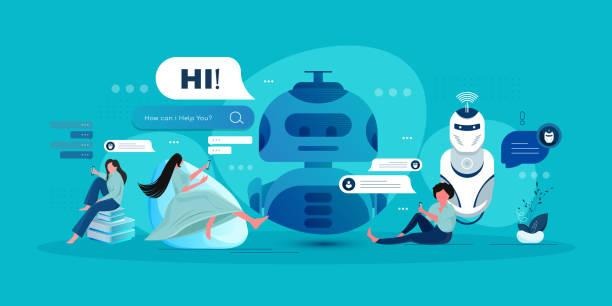
Chatbot with AI is designed to help you with customer questions by using natural language using artificial intelligence. AI chatbots are capable of managing more complex inquiries and offering more flexible responses than basic rule-based chatbots, which are restricted to answering queries that are programmed in advance. AI chatbots can answer a broader spectrum of questions and provide more flexible responses than basic rule-based chatbots, which are limited in their ability to handle preprogrammed responses.
Businesses can use them for:
- Customer support
- Product recommendations
- Lead generation
- Sales assistance
- Frequently asked questions
- Appointment scheduling
- User onboarding
- Internal employee support
An effective chatbot needs to do more than just deliver fluent answers. It should give people useful information that is based on reliable business data, and should be easy for users to complete tasks with.
Step 1: Define What Your Chatbot Should Do
Before selecting a platform or coding, identify what your chatbot should do. The setup that a customer support chatbot needs is going to be slightly different to a lead generation assistant or an onboarding tool.
Start by answering four questions:
- Who will be interacting with the chatbot?
- What issues is it intended to resolve?
- What is the information it will require?
- Where will the users have access to it?
For instance, an eCommerce company may create a chatbot to answer product inquiries, make recommendations and inform clients of their status on an order. The software company may develop one that provides explanations on features and the setup for new users. When the aim is clearly defined, you can avoid having a chatbot that does everything and is good at nothing.
Step 2: Choose How You Will Build It
You generally have three options when creating a chatbot with AI for your website.
Use a Ready-Made Chatbot Platform
A pre-designed platform can assist you in getting on the market rapidly without creating the whole platform from scratch. A number of tools offer a chatbot interface, AI features, knowledge base, analytics and website integration. It is a good way to go for small businesses and teams who don’t have a lot of technical expertise. But there might be less control over customization, data handling and integrations.
Build a Custom Chatbot
A custom chat bot allows you more control over the user experience, backend systems, data and functionality. It can be integrated with your CRM, databases, help desk, product catalog or any other business tools that the developer chooses to use. The only problem with this is that it needs more time and maintenance so unless you are ready for this task it may not favour you and your business
Use a No-Code or Low-Code Tool
There is a middle ground in the form of no-code or low-code platforms. They can assist businesses in developing AI-powered chatbots without the extensive coding and maintenance that some simple chatbot widgets require, providing greater flexibility as well.
Step 3: Build the Chatbot’s Knowledge Base
A chatbot is only as useful as the information it can access. If you give it incomplete or outdated information, it may provide answers that confuse customers.
Start with your most reliable sources, such as:
- Help center articles
- Frequently asked questions
- Product documentation
- Product catalogs
- Pricing information
- Return and refund policies
- Shipping information
- Company policies
- Internal process documents
Retrieval-augmented generation (RAG) can be used to ensure the website chatbot’s responses are rooted in authorized information. The system will look for relevant information in your selected knowledge base before producing an Output.Rather than just what it was trained with, the system will search for relevant information in your selected Knowledge base before producing an Output.
This can make the Chatbot more useful since it acts based on information that reflects your business. It’s also important to have a process for making the knowledge base more up to date.
Step 4: Connect Your Chatbot to Business Tools
The more that a chatbot with artificial intelligence can work along with other systems, the more powerful it becomes. You can, for instance, integrate your chatbot with a CRM, which will enable your sales staff to capture and manage leads. If it’s linked up to an order management system, then one can ask questions about their orders. When the chatbot can’t solve a problem, a help desk integration can help to generate a support ticket.
Possible integrations include:
- CRM systems
- Help desk platforms
- E-commerce systems
- Appointment scheduling tools
- Customer databases
- Analytics platforms
- Knowledge bases
Only connect components that the chatbot really must have. The more integrations, the more complex and the more security issues.
Step 5: Design a Simple User Experience
The chatbot you integrate should seem like it belongs on your website, not as if it’s a hindrance. Before starting up a chatbot, be sure to define its capabilities. Here are some suggested prompts you can include:
- “Track my order”
- “Help me choose a product”
- “What is your return policy?”
- “Contact customer support”
To get visitors to understand what the chatbot can do, it is possible to suggest a few questions that lead them into a conversation rather than leaving them guessing what to enter. You should also be able to access the chatbox effortlessly, and have no trouble using it. Make this easy to access as users navigate between relevant pages, and ensure they are easily accessible on mobile devices. Try not to deliver too much information in long answers.
Step 6: Give Your Chatbot Clear Boundaries
You have to specify its functions and restrictions. For instance: A client’s support chatbot could be programmed with answers about products and policies, but not promises regarding refunds or legal issues.
Your ChatBot should also be equipped to handle the situation when it has no answer to offer. It is better to use words of explanation than to make up a response, and to suggest an alternative.
A good alternative could be:
A useful fallback might be:
“I can help with product and order questions. For account-specific issues, please contact our support team.”
Step 7: Add Human Handoff
AI is not about letting customers get trapped in an automated never-ending conversation, it’s about helping your Customer Service (CS) agents. Provide clearly defined means of reaching humans when needed. The chatbot can also capture simple data prior to passing on the discussion in order to help the agent get a grasp of the situation. Ideally, a handoff should retain relevant context if available. The bot should not be asking the customer to repeat all the information that they already provided.
Human escalation is particularly important for:
- Complaints
- Sensitive issues
- Complex technical problems
- Billing disputes
- Account-specific concerns
- Requests requiring professional judgment
The AI-powered blend of this human and technological support can help with quicker response times and not diminish customers’ personal service needs.
Step 8: Test Before Launching
Refrain from sending up your chatbot following just a handful of basic questions. Simulate real conversations with customers by answering typical customer questions.
Check how the chatbot handles:
- Common questions
- Misspelled words
- Ambiguous requests
- Follow-up questions
- Questions outside its knowledge
- Unusual requests
- Attempts to access restricted information
- Requests that require human assistance
Try the chatbot with various devices and screen sizes as well. Ensure that the interface doesn’t obscure vital information on the website or disrupt navigation. Testing should be continued following the launch. Talking with real people will uncover issues which do not show up in preliminary testing.
Step 9: Monitor and Improve the Chatbot
Launching your chatbot is only the beginning. Review conversations regularly to see where customers struggle.
Pay attention to:
- Questions the chatbot cannot answer
- Conversations that end abruptly
- Frequent requests for human agents
- Incorrect or outdated answers
- Pages where users engage with the chatbot most
- Questions that lead to successful conversions
These patterns can help to enhance your knowledge base and conversation flows. For instance, customers will always ask about shipping times, and if the chatbot can’t give them a definite answer, you should improve the shipping information in your knowledge base.
Common Mistakes to Avoid
- Make sure to give the chatbot a clear role. It’s much easier to build, test and enhance a focused Chatbot.
- Make sure you define a clear role for your Chatbot to make it easier to test and improve.
- Avoid using outdated information
- Avoid making it hard to reach a human to help when there is an issue that needs to be sorted by a human touch
- Reach for meaningful outcomes rather than the number of conversations.
Frequently Asked Questions
How much does it cost to build a chatbot with AI?
The cost may vary on many factors, some being the platform itself, the AI model or the approach it was used to develop it. A custom tool may cost more than a ready-made tool since it needs more input to get it running.
Do I need coding skills to build an AI chatbot?
Not necessarily. For non-technical users, no-code and low-code platforms can be used to develop simple AI chatbots. More complex with custom integrations generally demand development expertise.
What information should I give my chatbot?
Use the accurate business data, including FAQs, product documentation, policies, pricing and support material.Ensure to add information that can help the Chatbot do its functions perfectly.
Can an AI chatbot replace human customer service?
Monitor resolution rates, customer satisfaction, rate of escalation, completed conversation rate, lead generation, and conversion rates. Reflect on relationships of previous occurrences to note improvements.
How do I know if my chatbot is working?
Monitor resolution rates, customer satisfaction, rate of escalation, completed conversation rate, lead generation, and conversion rates. Reflect on relationships of previous occurrences to note improvements.
Conclusion
Building an AI-powered Chatbot from scratch is not an easy task.You have to clear out a purpose, determine the development path, integrate reliable business information, create a user-friendly interface and make out boundaries. The best website chatbots are backed by accurate data and are based on customer needs. Quick answers to common questions, guide to tasks, and when to involve a “human”.
Once you are done with the chatbot, continue to continually improve it whether it was ready-made or otherwise. Keep an eye on the feedback from customers, track conversations, improve workflows, and enrich its knowledge base. You can find other useful information about AI chatbots, conversational AI, and Customer Service Automation at our website ChatbotsAI.net.