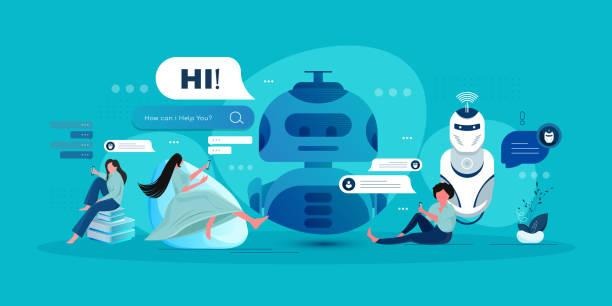

People want companies to provide support easily and quickly. If someone has a question about something they purchased, something about the product they bought, their account, or a service, waiting a long time for an answer can make a small problem a big hassle. That’s why companies are looking into using AI to boost customer service. This approach will enable them to provide responsive and efficient service to their clients. No one should be waiting in line for hours anymore – they want assistance immediately. With the help of AI tools, companies can ensure their customers are receiving optimal user experience and having their questions answered promptly.
Using a chatbot like OpenAI can be a big help to businesses when it comes to talking to customers. It can carry on natural conversations and perform simple things automatically, so that customers can receive support even after business hours. This eliminates the need for customers to wait for the availability of a human being, ensuring that they can easily access what they’re after and receive the assistance they need.
Having a chatbot presence at your website isn’t sufficient to make customers experience better. For this to work the Chatbot should be compatible with your system and also be ready to deal with any escalating issue that may arise with the system. Let’s have a look at these systems and how they can help improve your customer experience.
What Is an OpenAI Chatbot?
OpenAI Chatbot is any conversational AI application that relies on OpenAI’s AI models for interacting with customers in natural language. It can respond to inquiries, provide summaries, direct consumers through processes, and assist in customer service inquiries, depending on how it is created and incorporated. The term can refer to various ways it’s used. For instance, an AI chatbot could be on their website, or they could implement an AI assistant in their customer service system. They could even develop a custom conversational experience, one that’s linked to their business data and systems. This allows them to utilize it in various ways, as meeting their needs.
In contrast to the classic rule-based chatbots, modern AI-powered chatbots work differently. Most of the traditional chatbots are based on decision trees and pre-written scripts. Most of these programs are wired to follow a certain set of ways, if there is a way it has been set to answer questions, then that is how it will, and if a client uses any other style to answer a question then it may have some issues in answering or offering a service.
How an OpenAI Chatbot Can Improve Customer Experience
Provide Faster Answers
There are some questions that do not need a human to answer and this is where the openAI chatbot comes in. It can guide the client without needing to make a queue to wait for someone to come and assist.
For instance, if a customer were to inquire,
- When will they get here?
- What are your return policies?
- How to reset my password?
- When is your business open?
- What plan is most suitable for me?
Once the Chatbot is provided the correct and permitted data, it can respond to these queries in seconds.
This helps to lower friction in the process of a customer. Customers can ask questions and get answered on the spot without waiting for an email from a human.
Customers are able to submit a specific inquiry and have it answered with a conversational response, rather than waiting for an email or scrolling
Offer 24/7 Customer Support
Customer issues aren’t necessarily within business hours. A person might need assistance at night, in the early morning, or out of their usual time zone. AI Chatbot by OpenAI can offer support without breaks. This allows customers to contact the basic support whenever they require it.
It can be particularly helpful for companies that supply their clients to multiple locations. Customers in other time zones don’t need to wait until the team turns on. The presence of AI-powered customer service chatbots on the 24/7 basis is another advantage they offer apart from quick responses and increased scalability, which enables them to guide users through channels.
Improve Self-Service
A lot of consumers like to be able to fix basic issues. They may not wish to call support/ to wait for an employee if the answer can easily be found. Self-service can become more “conversational” with the help of an AI chatbot. A customer need not check through a long faq, just state the issue in their own terminology.
For instance, if the customer types,
“I ordered a product three days ago and want to know where it is.”
Some chatbots can be linked to the company’s order management system, which could allow them to offer useful tracking details. If it weren’t for that integration, it could still illustrate for the customer how they can keep track of their order. The key thing is that the Chatbot has to assist the customer in finishing a task instead of giving him a significant response.
Personalize Customer Interactions
Most customers like services tailored to their personal needs, OpenAI Chatbot can offer more personal interaction when provided with the right context and business data.
For instance, a returning customer could use the Chatbot on an e-commerce site to request something, and the AI would match it with products they had previously purchased. The information that can be gathered from an existing conversation can be used by a support chatbot to prevent the customer from repeating the information.
Interactions can be more relevant and have fewer steps thanks to personalization. Using customers’ data is not something to take lightly, it should have some guidelines for the amount of data you can share and that you can give a chatbot since this can also be a breach of piracy.
Reduce Repetitive Work for Support Agents
Customer service staff members are frequently faced with the same set of questions. This may waste time that agents could spend on more complex customer issues. AI-powered chatbots from OpenAI can manage appropriate repetitive queries, while human representatives concentrate on issues that call for more in-depth investigation, empathy, or judgment.
The Chatbot can provide standard responses to questions, and the employee can resolve the more complex issue of a damaged high-value item. For instance, the Chatbot can respond to inquiries regarding a common return policy, while the employee handles the more intricate dispute involving a high-value item that’s damaged. This gives rise to a combination of support types. Ai can person well but still there is need for some human involvement. This will make sure that it gives the perfect service without compromising on any aspect.
OpenAI Chatbot Use Cases for Better Customer Experience
Businesses can apply an OpenAI chatbot across several stages of the customer journey. Here are some of the services you can offer with OpenAI Chatbot
- Frequently Asked Questions
- Order Tracking
- Technical Support
- Appointment Scheduling
- Product Recommendations
- Lead Qualification
OpenAI Chatbot Benefits and Limitations
| Benefits | Limitations |
| 24/7 availability | May misunderstand complex requests |
| Faster responses | Can produce inaccurate information |
| Handles repetitive questions | Requires monitoring and updates |
| Supports customer self-service | Needs reliable business information |
| Can personalize interactions | Raises data privacy considerations |
| Scales across high conversation volumes | May frustrate users without human escalation |
Best Practices for Implementing an OpenAI Chatbot
Before launching an OpenAI chatbot, it is important for businesses to determine what issues they aim to address for their customers.
A practical approach includes:
- Start with clear use cases
- Use trusted information
- Connect relevant systems
- Create a human hand of
- Monitor conversations
- Measure results
- Protect customer data
If you want to find out more about how businesses can assess the benefits of AI-powered customer service solutions, be sure to check out our AI chatbot guide at ChatbotsAI.net. In addition, take a look at our conversational AI resources to learn more about how AI systems can facilitate customers’ more natural interactions with each other.
Common Mistakes to Avoid
A frequent pitfall is creating a chatbot without clarity on its goals. A business has to understand its goals, such as lowering support volume, shortening response times, increasing amounts of self-service, generating leads, or some other goal. The second error is outdated information. A chatbot can give you an out-of-date or inaccurate information, which can, in turn make your clients lose trust in you or your services
Remember that this is only to those clients who are willing to use them, you should not make it a mandatory that all clients should use AI when dealing with your business. Some clients believe in real human interaction and forcing them to believe in an AI can be a turn off all together. Last but not least, do not evaluate success just based on the number of conversations that are completed. A chatbot that deals with thousands of conversations, but makes customers frustrated, isn’t a strong customer experience.
Frequently Asked Questions
Can an OpenAI chatbot replace customer service agents?
It can handle a lot of the routine stuff, sure. But people are still crucial for tricky, sensitive, or unusual situations. You don’t want to leave those to just a bot.
How can an OpenAI chatbot improve customer service?
It answers fast, doesn’t need to sleep, and can help with simple or repetitive questions any time, day or night. When things get complicated, it knows to hand things off to the right person. That means customers waste less time waiting or getting bounced around.
Can an OpenAI chatbot access customer information?
It can, if you’ve connected it to your databases or other systems. That’s up to how you build it, just make sure you’re strict about privacy and security along the way.
How do I know if an AI chatbot is improving customer experience?
Look at the numbers that matter: Are customers happy with the interaction? Are their issues actually getting solved? How often are they getting bumped by a human because the bot couldn’t handle it? Response time matters, but resolution quality matters more.
Conclusion
By making customer support more efficient, accessible and user friendly, an OpenAI chatbot can transform customer experience. They can get instant responses to regular queries, have assistance outside regular working hours as well as carry out redundancy tasks by conversational self-service. The technology can also help human service teams by alleviating repetitive tasks and enabling the agent to attend to complex user requirements. For businesses, they can use it for order tracking; troubleshooting; appointment scheduling; product suggestions, and lead qualification.
But it is important to sensitively implement this. An AI chatbot’s success relies on the accuracy of its data, well-integrated tools, robust data security measures, and seamlessly offering a human backup option. AI should not be the answer to ending customer service; it should be the answer to better customer service. A combination of automated service and human knowledge can result in improved customer experiences that are both faster and simpler, but also remain personalized. Visit ChatbotsAI.net for more information on AI chatbots and customer experience, and find handy guides for conversational AI, chatbot technology, and customer service automation.