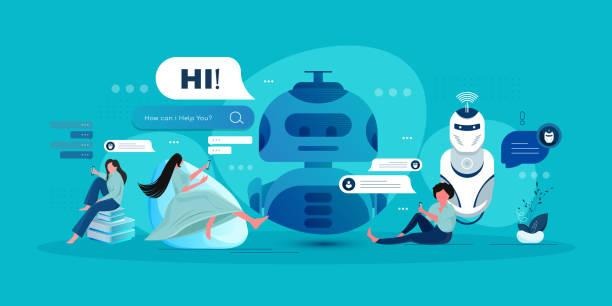
Chatbot for Customer Service: How a Chatbot for Customer Service Reduces Costs and Improves Satisfaction

Customer service can become expensive as your business grows, because customers usually mean you will have more questions and more live chats. Hiring more human agents can mean you have to dig into your pocket, especially when most of the questions can be handled with an automated chatbot.
A chatbot for customer service is able to manage your workload more efficiently without having to worry about a pile-up of requests.
A chatbot for customer service comes with more merits than demerits, especially if you use it well and ensure that it has all the updates it needs. However, the technology works best when businesses use it to support their teams rather than simply trying to replace human interaction.
This chatbot can function perfectly if you use it to support your team and not when you want it to be your main support team to replace the human agents.
What Is a Chatbot for Customer Service?
A customer service chatbot is an automated conversational bot that helps customers before, during, and after they make a purchase. Can be delivered via a website, mobile app, messaging system, or another electronic medium.
Plain or simple chatbots adhere to a set of pre-programmed dialogues. For instance, today’s AI chatbots are capable of interpreting human language and generating answers to queries by accessing information from the company.
Depending on the platform, a customer service chatbot can:
- Answer frequently asked questions
- Provide product information
- Check order details
- Explain company policies
- Help customers troubleshoot problems
- Collect customer information
- Create or update support requests
- Direct customers to relevant resources
- Transfer conversations to human agents
This will give your business many ways to automate support without removing the human assistance from the customer experience.
How a Chatbot for Customer Service Reduces Costs
One of the most crucial merits of automated customer services is the ability to be available to handle most repetitive questions without needing an agent all the time when handling conversations with the clients.
Automates Repetitive Questions
Customer service teams often answer the same questions repeatedly.
Customers may ask about:
- Shipping times
- Return policies
- Business hours
- Pricing
- Product availability
- Payment methods
- Account procedures
- Order tracking
Some questions may be very important to the customers, yet they do not need a lot of research, which is a good way to use the customer service chatbot. This gives agents more time to work on complicated issues that need investigation, judgment, or attention. As time goes on, decreasing repetitive work can make the use of the current support teams more efficient.
Handles Multiple Conversations at Once
Only a human operator can attend to a small number of simultaneous conversations. Customer interactions can be processed by a chatbot at the same time. This can be especially helpful during rush hours.
For an online sales company, for instance, they may see a spike in support calls during a significant sale. When a customer comes to them with a common question, the chatbot can provide the answer without the customer having to wait for an available agent.
This leaves room for human agents to deal with those cases that need their attention. This capability of handling high volumes of conversations can help minimize the need for constant growth of support resources as more and more customers want to talk with them.
Provides 24/7 Assistance
The majority of human support teams operate in shifts. But customers can at any time require assistance. A chatbot can be available for automatic support after office hours. It can take questions, offer resources, or collect information and lead the customers to take the next step.
This can minimize the wait time for customers to receive customer service once the business is reopened. It also offers an option to foreign businesses looking to offer basic support in various time zones without maintaining a staff of support agents in each office worldwide.
How a Chatbot Improves Customer Satisfaction
Faster Responses
A quick response is usually preferable to customers when it comes to obtaining a response, particularly when they have a simple question. Many basic requests can be addressed very promptly by a chatbot. There’s no need to wait for an agent to be available or wait several hours for an email response.
For instance, if the person seeks a return policy, they will be able to get the information in just seconds. Quick responses may be helpful and minimize wait time stress.
Easy Access to Information
Not all customers are aware of how to find information on a website. They might struggle to find a return policy, specifications, a shipping page, or a troubleshooting page.
A chatbot is a conversational guide. Users can ask a question and get a direct answer to the question or a link to the relevant resource without having to trawl through several pages. This saves the effort of customers in information searching.
More Consistent Answers
Consumers have come to expect that businesses will tell them what is true. Sometimes it is possible to get a slightly different interpretation of the same question from different agents, which can result in disparities in answers.
A chatbot can give uniform responses using the acceptable details about the company. This works well, especially with useful policies and other frequently requested information.
You should always keep your chatbot knowledge updated all the time. In case there are some changes in the information, then the chatbot should be updated as well.
Use Chatbots to Improve Agent Productivity
High workloads are one source of pressure for customer service agents. When staff members are frequently just answering simple questions, they do not have time to process complex queries and those who require ‘human contact’.
By taking care of basic requests before agents take them, a chatbot can ease this load. It may also capture fundamental details prior to a discussion. For instance, it could request an order number and the reason for the support contact.
The agent then begins the dialogue with relevant information, rather than the first few minutes asking for basic information. This can facilitate productivity and give the customer and employee a better feeling.
Use Customer Conversations to Find Problems
The interactions with the chatbots can be helpful to gain knowledge of customer needs.
Businesses can review conversations to identify:
- Frequently asked questions
- Common product complaints
- Confusing website content
- Repeated technical problems
- Missing information
- Customer concerns about pricing
- Reasons customers request human assistance
Such information can inform companies’ products and support enhancements and improvements. If hundreds of customers ask the same product feature question, for instance, then the business may have to make the information on the product page more understandable. The chatbot thus turns into a device for feeding back the user’s feedback and for providing support.
How to Make a Chatbot for Customer Service Effective
Just having a chatbot is not enough to get better results. It is important for businesses to create an experience for the actual customer needs. Begin by discovering the most popular support requests. Typically, the most viable candidates for automation are these businesses. Proceed to provide the chatbot with the correct data and establish straightforward rules on how to react in various situations. Keep discussions brief and informative. Avoid probing customers for details they are not interested in entering before giving them info. Watch and listen during the conversation and recognize the questions that you might not be able to answer properly. Bring these findings to enhance its knowledge and conversation flows.
Frequently Asked Questions
Can a chatbot reduce customer service costs?
Yes, a chatbot is able to automate repetitive requests and provide support outside normal working hours.
Does a chatbot improve customer satisfaction?
It can help increase satisfaction by minimizing wait times, delivering timely responses, and making information more readily accessible. The responsiveness of the Chatbot plays a significant role, too.
Can a chatbot replace customer service agents?
A chatbot can handle a lot of routine conversations, but it still does not match the level of assistance that human agents can handle.
Can a customer service chatbot work 24/7?
Yes. Chatbots can provide support and service 24/7/365, making them capable of running continuously.
What questions should a chatbot handle?
A good chatbot should be able to handle repetitive questions and other routine topics and leave the more complex ones to the human agents.
How can businesses measure chatbot performance?
Track response times, resolution rates, customer satisfaction, escalation rates, automated conversation volume, and support costs.
You can track the response time and automated conversations, and also try to see the support costs to see whether it is making financial sense.
Conclusion
A chatbot for customer service is good for managing the growing support demands while also controlling the operational costs. It allows the human agents to focus on more complex customer needs since it works by providing 24/7 assistance and handling repetitive questions. The greatest benefits are achieved through judicious use of automation. Businesses should provide accurate information to the chatbot, keep an eye on how it performs, and offer an accessible way to get help from a human.
Any chatbot that makes customer service easier, not harder, is successful. But when businesses offer quick automated support combined with expert customer representatives, they have the capacity to build a support system that is more effective for the business and superior for the consumer. If you want more information on AI chatbots, conversational AI, customer service automation, and chatbot platforms, visit ChatbotsAI.net and discover how you can enhance your customer experience.