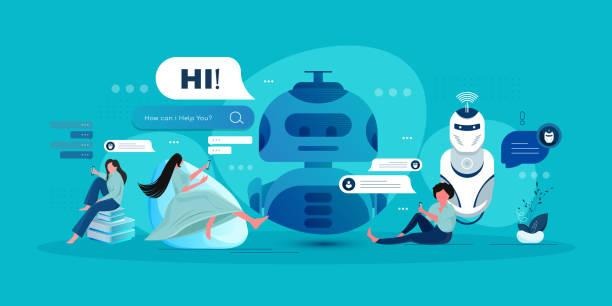

Chatbots can assist your business to answer queries, direct prospective customers to your products or services, gather leads, and assist in shopping on your site.
A good chatbot can help you answer questions and increase your leads within the online space. A chatbot can help guests rather than have to search for the correct page or contact your staff; rather, it can assist them throughout the website experience.
But plain old adding a chat widget won’t lead to a higher number of conversions. Your chatbot should have a clear goal and have valuable information that will help it understand what to deliver to visitors and offer them a way to take the road of action you’re seeking. No matter if you are a professional service, an online eCommerce shop, a SaaS business, or a local business, you can utilize a web chatbot to assist your website visitors discover information and take action. This guide will explain how to add a chatbot for your website visitors and how to create a successful one around conversions.
How to Add a Chatbot for Website Visitors That Converts
Decide What You Want the Chatbot to Achieve
Outline the primary purpose of the Chatbot prior to deployment. The more tasks a chatbot handles, the more it can get confusing and difficult to manage.
Your main objective will be:
- Generate qualified leads
- Increase product sales
- Book appointments
- Answer support questions
- Help visitors find products
- Reduce repetitive customer inquiries
- Guide visitors through your website
A consulting firm could employ its chatbot to find new prospects and set up consultations, for instance. One can be used in an e-commerce business to suggest products and answer queries regarding delivery and returns. After you have established the goal, the conversation can be arranged to be about that outcome.
Choose the Right Chatbot Platform
There are many platforms that provide tools that can allow you to create and embed on your website, so there is no need to develop a chatbot from scratch.
When comparing options, consider:
- AI capabilities
- Ease of setup
- Website integration
- Customization
- Knowledge base support
- CRM integrations
- Analytics
- Human handoff
- Pricing
- Security
If you aren’t interested in developing, a no-code platform can suit your requirements. For businesses that have more complex requirements, a more customizable solution that is able to be connected directly to their internal systems may be better suited.
You can discover more about the features included in chatbot platforms to consider in your search for a solution at ChatbotsAI.net.
Prepare the Information Your Chatbot Needs
Your chatbot should have the correct information to give good answers. Gather web pages with information that users will want to view before launching it.
This could include:
This could include:
- Frequently asked questions
- Product descriptions
- Pricing information
- Shipping policies
- Return policies
- Service details
- Business hours
- Contact information
- Appointment information
- Help center articles
Make sure any time you add anything to your website you update the chatbot too to ensure that it has all the current information that they provide to the customers.
Add the Chatbot to Your Website
The majority of website chatbot providers offer an embed code or integration that you can simply place on your site.
The process usually involves:
- Create your chatbot account.
- Configure its behavior and appearance.
- Add your business information or knowledge base.
- Set up conversation flows and instructions.
- Connect relevant business tools.
- Copy the chatbot’s installation code or use a website integration.
- Add it to your website.
- Test it across different devices.
If you have a website that uses custom systems, then you may need a developer to install and integrate the chatbot for you. However, if you are on modern websites, then you may be able to add chatbots to your website without needing a lot of coding.
Design the Opening Message Carefully
The first message has the significant power to make visitors interact with the chatbot or not.
Be careful not to go for generic greetings like ‘How can I help you?’, in the event that you can give more helpful advice.
Instead, make the chatbot’s purpose clear.
For example:
“Looking for the right plan? I can help you compare our options or schedule a demo.”
Suggested questions or buttons can also be included, which offer visitors a starting point.
Examples include:
- “Compare plans”
- “Find a product”
- “Book a consultation”
- “Track my order”
- “Talk to support”
These prompts can help you reduce the effort you may need to start a conversation.
Use the Chatbot to Qualify Leads
A chatbot can assist your sales team with recognising visitors who are more prone to turning into clients. Don’t immediately request an email address; ask a question to find out what the person needs before asking for their email.
For example, the chatbot could ask:
“What are you looking for today?”
The next question may be influenced by the answer from the visitor. A software reseller could ask about the size of the company, what software they are currently using, or what their biggest business pain is.
Keep Conversations Short and Useful
Lengthy conversations can be boring, which will not sit well with your customers. Provide helpful information as soon as possible, and limit the number of inquiries.
A good conversation should lead to a definite outcome. A good answer will be valued and offer an avenue for continued interaction. Avoid leading visitors through a succession of questions before providing the information that they had asked for.
Give Visitors a Human Support Option
Customers shouldn’t feel an impediment to your team when using a chatbot. In cases where complaints are involved, account issues, complex technical problems, or sensitive issues, some questions may need the help of a human. Provide clear means for visitors to seek human assistance.
The chatbot can gather basic info prior to transferring the conversation. If available on your platform, keep the history of the conversation for the customer, so he does not have to tell you yet again. This makes things easier and more efficient for your team to get through discussions.
Personalize the Experience
Personalization can help make conversing with a chatbot more relevant. For instance, the chatbot’s reply could vary according to the webpage a visitor is on. A customer might need to compare plans if looking at pricing information, and reading a product page might require technical information.
Multiple experiences of the chatbot can be developed for various audiences as well. They may be a repeat customer who wants help with a product they’ve already purchased, or a first-time customer who wants information about a product. The aim is not to gather as much data as you can. Take advantage of the information that is available to make conversation more useful.
Optimize the Chatbot for Conversions
To keep the visitor on track toward their next action, a chatbot needs to be helpful but not too pushy.
Depending on your business, the desired conversion might be:
- Purchasing a product
- Booking a meeting
- Requesting a quote
- Starting a free trial
- Subscribing to a newsletter
- Contacting sales
- Completing a form
Ensure that all the actions are easy to complete from the conversations to make it more useful and easy to use by customers.
Test Before You Launch
Don’t take the assumption that your AI will succeed without making some test questions first.
Test it with a set of realistic scenarios of visitors.
Ask:
- Does it understand common questions?
- Are its answers accurate?
- Does it handle spelling mistakes?
- Can it answer follow-up questions?
- Does it know when to involve a human?
- Does it guide users toward useful actions?
- Does it work properly on mobile devices?
Have staff in your sales/support team try it out too. They can find questions that users of your site often have, but you haven’t thought of.
Track Performance and Improve It
Once your chatbot goes live, monitor its performance.
Make sure to monitor your chatbot once it goes live to track its performance, and if at all there is any issue with the launch.
Important metrics can include:
- Number of conversations
- Engagement rate
- Lead capture rate
- Appointment bookings
- Conversion rate
- Customer satisfaction
- Human escalation rate
- Frequently asked questions
If a lot of visitors post questions for which it does not know the answer, enhance its knowledge base. When a lot of visitors drop out during a specific point in the conversation, make that section of the conversation simpler. You can also discover more about enhancing automated customer interactions at ChatbotsAI.net with our resources on conversational AI.
Common Mistakes to Avoid
- Avoid launching a chatbot without a clear purpose
- Do not overload the chatbot with too many questions
- Avoid hiding the human support option
- Do not leave the chatbot unattended after launch
Frequently Asked Questions
Can a website chatbot generate leads?
Yes. A chatbot can ask qualifying questions among other services, which are directly qualified prospects to sales or booking pages.
Does a chatbot improve website conversions?
It can. A chatbot designed with care can help cut down on friction by providing answers to your questions and aiding visitors in moving to the next step. The results are dependent on the chatbot, audience, offer, and website experience.
Do I need coding skills to add a website chatbot?
Not always. Some of the platforms have no code/low code installation capabilities. Native integrations might need development skills.
Should my website chatbot use AI?
AI can help with questions that are phrased in multiple ways or when a visitor requires conversational help. In cases of simple and predictable tasks, rule-based workflows can still work.
How do I know if my chatbot is successful?
Monitor conversations, leads, bookings, conversions, customer satisfaction, and escalation rates. Look at these and see if the chatbot is providing value based on the business goals.
Conclusion
A website visitor chatbot can provide more than just answers to questions. If it is set up correctly, it can direct visitors, collect valuable leads, suggest products, schedule meetings, and communicate with customers. First, establish one objective. Select a platform which suits your technical and business needs, which has accurate information, and that is created for brief conversations which assist visitors to take purposeful action.
After that, validate the chatbot prior to launching and track its performance following the launch. The best chatbot is the one that enhances the user experience as well as helps your business convert it into sales. On ChatbotsAI.net, you can learn more about AI chatbots, conversational AI, customer service automation, and chatbot platforms to create more effective automated customer experiences.